
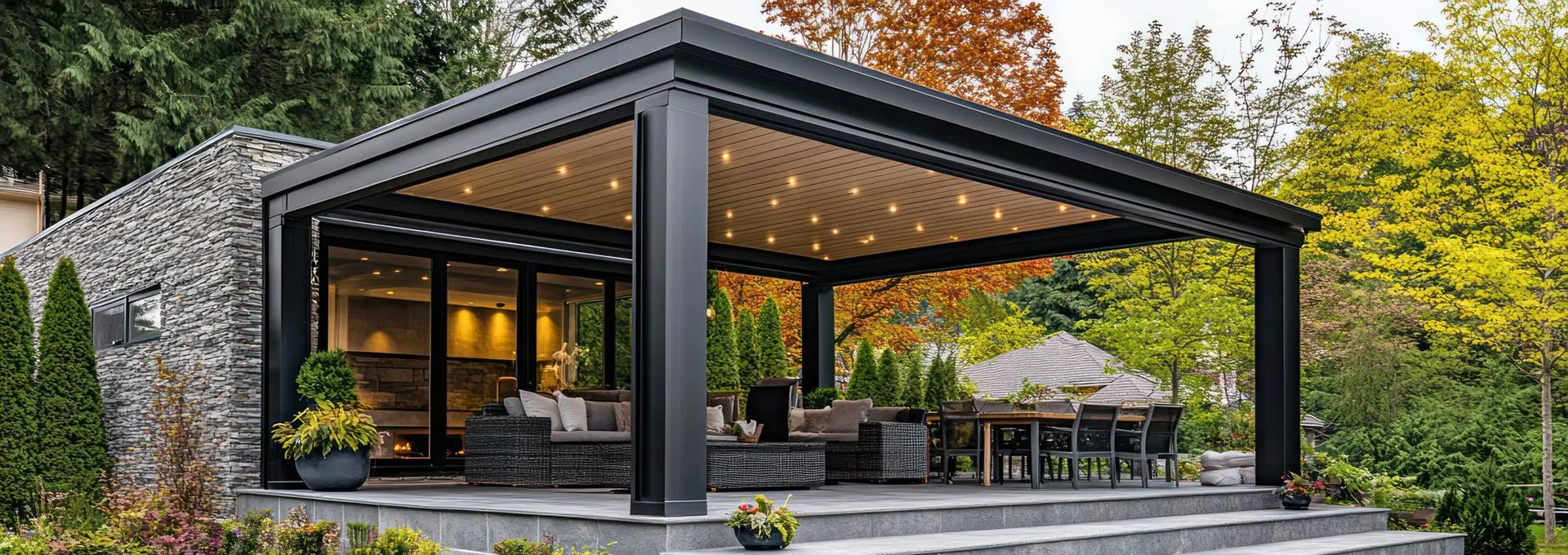
Malatya Pergola and Bioclimatic Pergola
In Malatya, "outdoor system" brings to mind not a terrace but an apricot drying yard. It is one of the most particular briefs in the country: the crop has to dry in the sun while staying protected from dust, birds and unexpected rain. In other words, a space that is open but protected.
There is residential and hospitality work too, of course — garden homes in the city, café terraces, public buildings. But what sets Malatya apart is the specific requirement of the drying yard.
Why Pergola Systems Are Chosen in Malatya
- Apricot drying: Sun is required; rain, dust and birds spoil the crop.
- Dry, fierce summers: In built-up areas, unshaded space is unusable at midday.
- Dust: Wind-borne dust on dry ground affects both crop and system.
- New building stock: In rebuilt properties, the system can be planned at design stage.
Bioclimatic Pergola Systems in Malatya
A drying yard is one of those places where a fixed solution does not work. A solid roof will not dry the crop; a fully open yard loses it to rain and dust. What is needed is a canopy that changes position: fully open, the sun reaches the trays directly; when cloud or a dust storm arrives, it closes.
Three details lead in this use. First, a rain sensor, so nobody has to watch the sky through the drying season. Second, the discharge direction: water running off the closed canopy must go outside the drying yard, not into it. Third, the side enclosure: a mesh screen that intercepts dust and birds while maintaining airflow.
On urban projects the usual priorities apply: in dry heat, shade and ventilation are planned together, and if fabric is chosen it should be a breathable acrylic.
Where Pergolas and Bioclimatic Pergolas Are Used
- Apricot drying and grading yards: A canopy that admits sun and closes against rain and dust.
- Processing plants: Cover over loading, holding and dispatch areas.
- Garden homes: Shaded seating in the centre and Battalgazi.
- Cafés and restaurants: Terraces built for daytime use in the city.
- Schools and public buildings: Shaded waiting areas in the grounds.
Complementary Systems We Supply in Malatya
- Rain and dust sensors: Close the system automatically through the drying season.
- Mesh side enclosures: Intercept dust and birds while maintaining airflow — critical in a drying yard.
- Edge-discharge drainage: Taking water clear of the protected area when the canopy closes.
- Breathable acrylic fabric: For dry heat on residential and hospitality projects.
The three enemies of a drying yard
Three things lose the crop in apricot drying: unexpected rain, carried dust and birds. Each needs a different answer. A canopy that closes deals with rain; a mesh side enclosure deals with dust and birds; and neither may interrupt the airflow — because without airflow, drying stops. The arrangement that solves all three at once is a louvred canopy together with mesh side screens. Backed by a sensor, the operator no longer has to watch the sky.
What drives the price
Area and span, system type, structural section, motors and automation, side enclosure. On drying projects, sensors, mesh enclosures and discharge direction lead; on residential ones, shade control and fabric type.
Why Elit Pergola?
- Automation for drying: Rain and dust sensors selected for the project.
- Enclosures that protect the crop: Mesh screens hold back dust and birds without cutting airflow.
- Discharge direction planned: Water taken clear of the protected area.
- Our own installation team: Installation is never subcontracted.
- After-sales: Spare parts support continues for motors, louvres and fabric.
If you have a project in Malatya, contact us for a free site visit.
Frequently Asked Questions
A drying yard needs both sun and protection — is that possible?
It is. Fully open, the louvres admit sun directly; a rain or dust sensor closes the system. Mesh side screens hold back dust and birds without cutting airflow.
Do side enclosures slow the drying?
Not with mesh fabric; its openness factor maintains airflow. An opaque enclosure interrupts the flow and hinders drying.
Where does the water go when the system closes?
It must discharge outside the drying yard. Water dripping in at the edge wets the crop you are protecting, so the direction is planned at survey.
What can be done about birds?
A mesh side enclosure is the most practical answer; it forms a physical barrier without interrupting airflow.
What do you recommend for a terrace in the city?
Planning shade and ventilation together for dry heat. If fabric is preferred, choose a breathable acrylic; warm air builds up under a solid cover.