
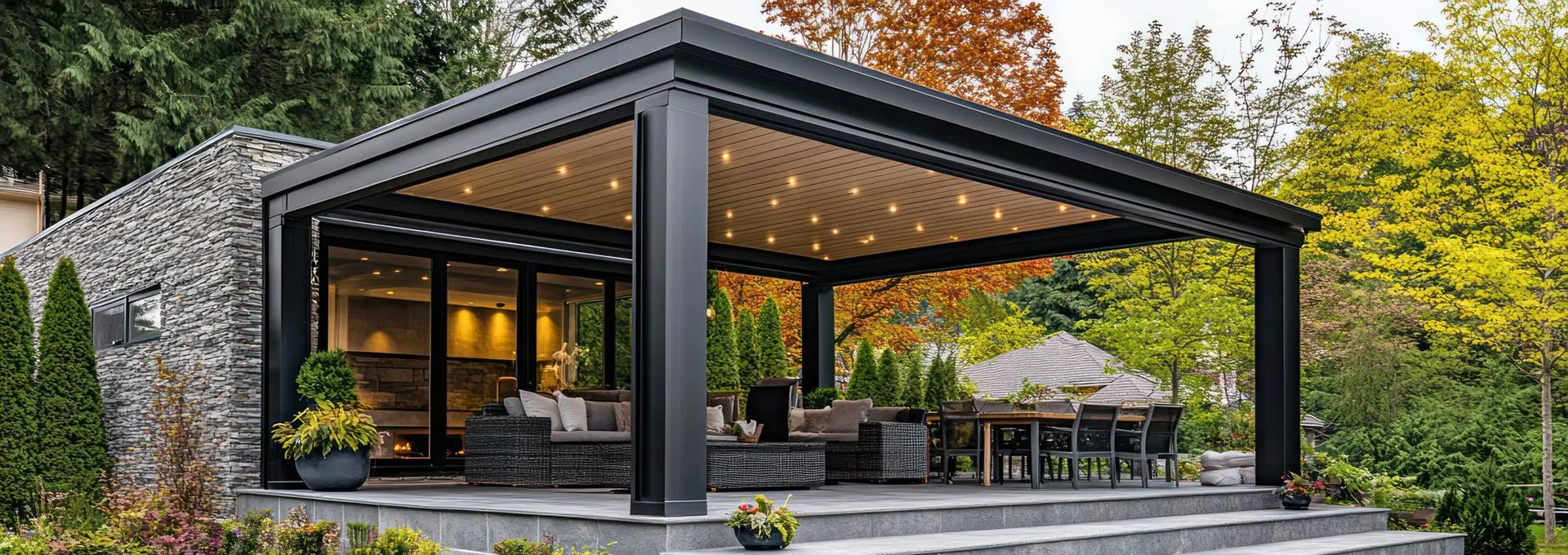
Bilecik Pergola and Bioclimatic Pergola
Elit Pergola installs pergola, bioclimatic pergola and shading systems across Bilecik — from walled gardens in the city to social areas at plants in Bozüyük and Söğüt, detached buildings in Osmaneli and Gölpazarı, and businesses near the university.
Bilecik lies in the transition belt between Marmara and central Anatolia: neither as humid as the coast nor as dry as the interior. That intermediate position means a system has to answer both summer shade and winter shelter.
Why Pergola Systems Are Chosen in Bilecik
- Transitional climate: Four distinct seasons raise the value of a moving system.
- Industrial scale: Marble and ceramic plants need sheltered social areas and dispatch entrances.
- Valley setting: Part of the settlement sits in a valley where airflow can be limited, making ventilation important.
- Dust: Where marble and ceramic activity is dense, dust shortens maintenance intervals.
Bioclimatic Pergola Systems in Bilecik
Where the four seasons are distinct, the advantage is that the system can do different jobs through the day and year: shade at midday in summer, rain protection in autumn, and open louvres for solar gain in winter.
In an industrial setting the second subject is dust accumulation. Marble and ceramic dust collecting on upper surfaces and in gutters turns to mud in rain and blocks the flow. That does not cause faults, but it shortens maintenance intervals, and the pre-winter clean matters most.
Where Pergolas and Bioclimatic Pergolas Are Used
- Industrial sites: Canteen entrances, break and dispatch waiting areas in Bozüyük and Söğüt.
- Private gardens: Seating areas in the centre, Osmaneli and Gölpazarı.
- Cafés and restaurants: Terraces in the city and around the university.
- Institutional: Sheltered routes at schools and public buildings.
- Hospitality: Boutique terraces around the historic quarter.
Complementary Systems We Supply in Bilecik
- Zip screens: Cut wind and dust and extend the shoulder seasons.
- Glazed systems: Double-glazed options for heated volumes.
- Windbreaks: Interrupting horizontal flow at businesses and plants.
- Double-opening awnings: Coverage with few posts across large facility areas.
Maintenance planning in a dusty setting
Around marble and ceramic plants, the standard two thorough cleans a year may need to become three, or four in heavily dusty locations. The most critical is clearing gutters before winter: water trapped in a blocked gutter freezes and strains the profile. We say so at quotation stage so maintenance expectations are set correctly.
What drives the price
Area and span, system type, number of posts and profile section, motors and automation, and the choice of side enclosure. On facility projects, outlet and drainage detailing leads; on residential ones, the winter enclosure choice.
Why Elit Pergola?
- On-site survey: Dust sources, airflow and ground assessed on site.
- Transparent quotation: Every item including drainage and outlet detail in writing.
- Specified for the setting: Dust, shade and winter use addressed together.
- Our own installation team: Installation is never subcontracted.
- After-sales: Spare parts support continues for motors, louvres and fabric.
If you have a project in Bilecik, contact us for a free site visit.
Frequently Asked Questions
How often is maintenance needed in a dusty setting?
The standard is two thorough cleans a year; near marble and ceramic activity it becomes three, and four in heavily dusty locations. Clearing gutters before winter is the most critical.
Is ventilation a problem in a valley setting?
Airflow can be limited, which makes the intermediate louvre position important. Warm air is trapped under a solid cover; the louvre gaps release it upwards.
Are wide spans possible on a facility site?
They are. Wider spans need larger sections, and a double-opening arrangement minimises posts.
Is enclosed winter use possible?
Yes. A glazed enclosure allows heating, with ventilation openings planned from the start for condensation.
How long does installation take?
Once made-to-measure production is complete, a standard terrace usually takes one or two days.