
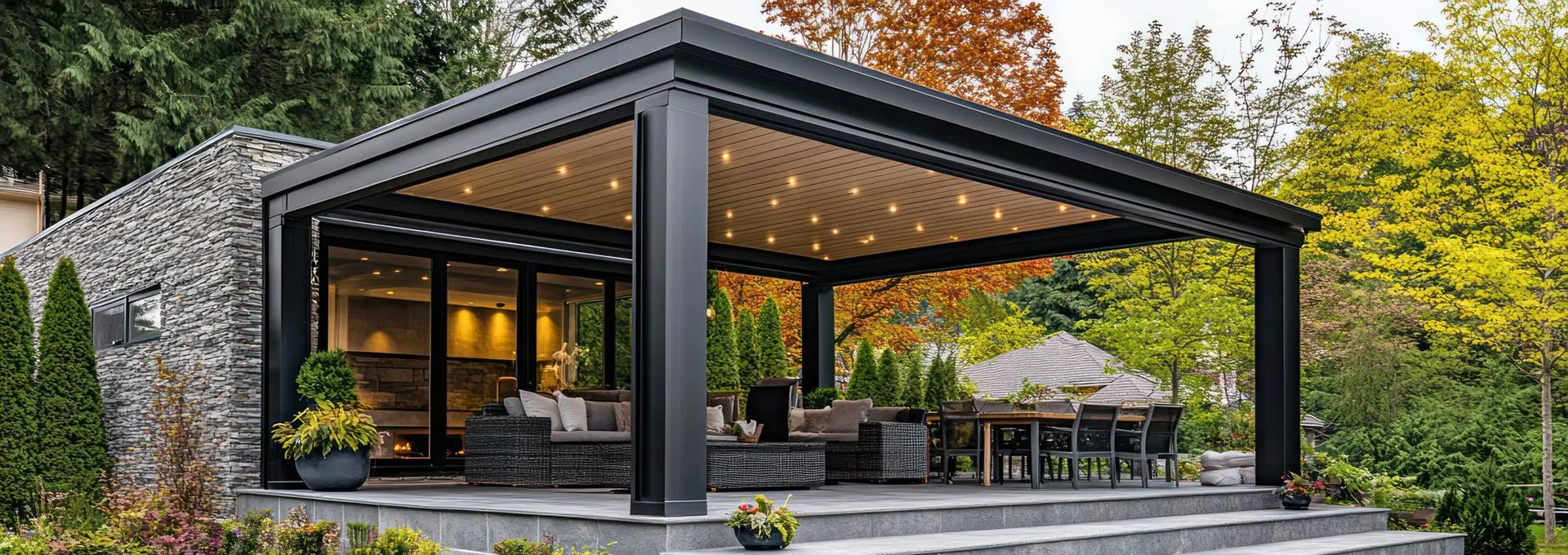
Bitlis Pergola and Bioclimatic Pergola
In Bitlis a dimension that goes undiscussed almost everywhere becomes decisive: the height of the system above the ground. The reason is not snow load but snow depth — the layer that accumulates on the ground here reaches some of the greatest depths in the country.
If a metre of snow builds up beneath a canopy, the space becomes unusable however sound the structure is. So on Bitlis projects the clear height is discussed first, and everything else after.
Why Pergola Systems Are Chosen in Bitlis
- Snow depth: Snow accumulating on the ground eats directly into usable height.
- Narrow valley settlement: The town sits in a steep, narrow valley with limited plots and access.
- Long winters: An enclosed, heatable volume multiplies the usable part of the year.
- Short summers: The outdoor season is brief and must be used efficiently.
Bioclimatic Pergola Systems in Bitlis
The first design decision here is clear height. The system is raised to allow for the snow layer that will build up beneath it in winter; otherwise a canopy that reaches head height by January is nobody's seating area. That decision also affects clearances above doors and windows.
The second is the ability of the louvres to shed snow. Opening them lets the accumulation drop — but on a narrow valley plot, where that snow lands is a serious matter: a neighbouring plot, a footpath or a doorway may be a few metres away. The shedding direction is drawn with the layout.
The third is access. Carrying long profiles up steep, narrow streets is difficult, so the system is produced modularly and the joints are completed on site.
Where Pergolas and Bioclimatic Pergolas Are Used
- Public buildings and schools: Sheltered routes raised for snow depth.
- Cafés and restaurants: Enclosed winter terraces.
- Garden homes: Sheltered entrances and seating on the slopes.
- Hospitality: Hotel entrances and arrival areas.
- Farm businesses: Cover over tobacco and produce holding areas.
Complementary Systems We Supply in Bitlis
- Raised structural arrangements: Clear height set with snow depth in mind.
- Double-glazed systems: An enclosed volume for a long winter; polyamide-broken profiles essential.
- Modular production: Component lengths that can travel narrow, steep streets.
- Snow-shedding direction plan: Layouts that keep neighbouring plots and footpaths clear.
Not load but depth: the constraint nobody mentions
Snow load concerns the weight a system can carry and gets asked about in quotations. Snow depth concerns the space left beneath it and is asked about almost never. In Bitlis the second matters as much as the first: a canopy that is not raised enough stands perfectly sound while becoming unusable in winter. That is why our survey question here is "how deep does the snow lie here in winter?"
What drives the price
Area and span, system type, structural section, motors and automation, side enclosure. Here the clear height decision, snow load capacity and, on narrow streets, access lead.
Why Elit Pergola?
- Depth asked about too: Clear height set allowing for the snow that builds up beneath.
- Shedding direction planned: Neighbouring plots and footpaths protected.
- Modular production: Component lengths set for narrow, steep streets.
- Our own installation team: Installation is never subcontracted.
- After-sales: Spare parts support continues for motors, louvres and fabric.
If you have a project in Bitlis, contact us for a free site visit.
Frequently Asked Questions
How high should the system be?
It is set allowing for the snow layer that will accumulate beneath it in winter. A canopy that is not raised enough remains structurally sound while becoming unusable.
Are snow load and snow depth the same thing?
No. Load concerns the weight the system can carry; depth concerns the usable space left beneath it. In Bitlis both should be asked about separately.
Could snow fall onto a neighbouring plot when the louvres open?
It could, unless planned. On narrow plots the shedding direction is set with the layout so neighbouring plots and footpaths stay clear.
Is installation possible on a narrow, steep street?
It is. The system is produced modularly, component lengths kept transportable, and the joints completed on site.
Is enclosed winter use possible?
Yes, and it is particularly worthwhile here. A space closed with double-glazed systems can be heated; polyamide-broken profiles and a ventilation opening are essential.