
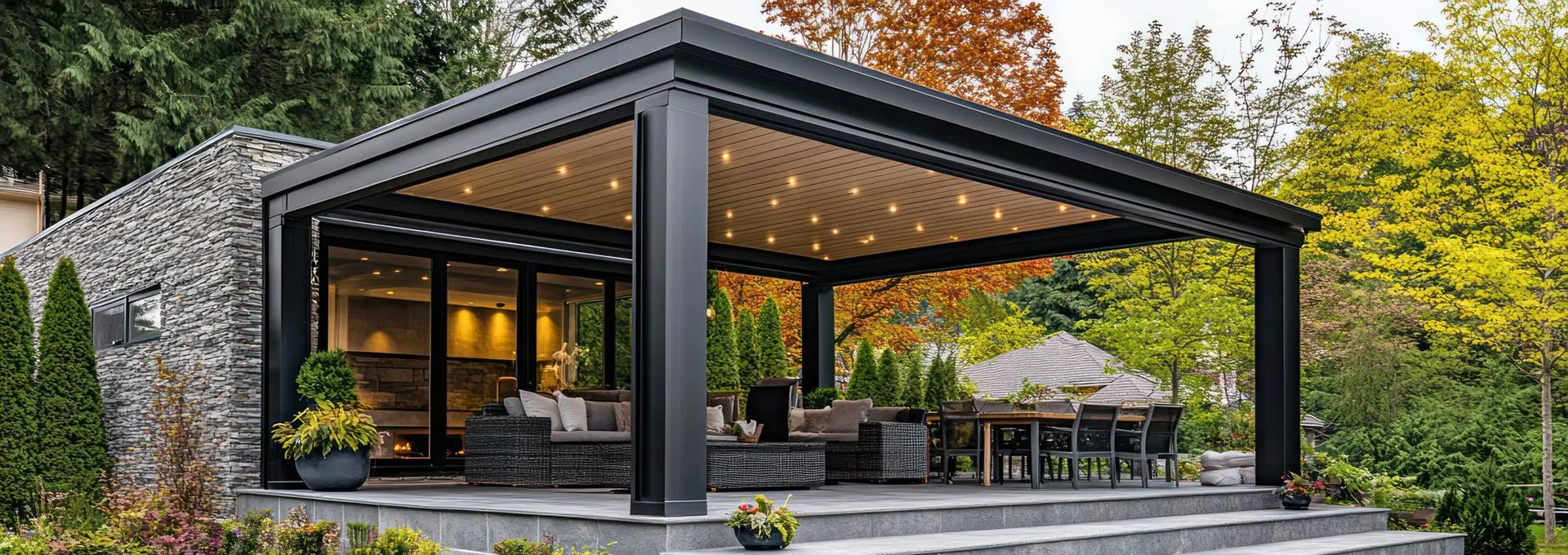
Iğdır Pergola and Bioclimatic Pergola
Iğdır is eastern Anatolia's unexpected province. It borders Kars and Ağrı, yet its climate resembles neither: set in the Aras valley at a far lower altitude than its surroundings, its summers are hot and dry. That is why cotton and apricots grow here.
It also inverts the system decision. In the neighbouring provinces the subject is snow load; here it is shade. A solution built "for winter", as elsewhere in the east, is wasted cost in Iğdır.
Why Pergola Systems Are Chosen in Iğdır
- Dry, fierce summers: Midday sun makes unshaded space unusable, so shade is a requirement.
- Agricultural processing: Apricot and cotton facilities need cover over grading and holding areas.
- Plain wind and dust: Wind-borne dust in open country makes side enclosure as necessary as shade.
- Mild winters: Snow loads are moderate compared with neighbouring provinces, freeing budget for shading.
Bioclimatic Pergola Systems in Iğdır
In a dry, very sunny place the main benefit of a louvred system is adjusting the shade angle through the day. Morning sun from the east, high sun at midday and western sun in the evening all arrive at different angles; a fixed canopy answers only one of them.
The second point is that in dry heat, shade only produces coolness if the air moves. Warm air is trapped under a solid fabric cover; air filtering between the louvres makes the difference. If fabric is preferred, a breathable acrylic should be specified.
The third is dust. Dust carried on the plain wind makes a table unusable regardless of shade, so side enclosure here is planned for dust as much as for wind.
Where Pergolas and Bioclimatic Pergolas Are Used
- Apricot and cotton businesses: Grading, pre-drying holding and loading areas.
- Garden homes: Barbecue and seating corners in the centre and Tuzluca.
- Cafés and restaurants: Terraces built for daytime use in the city.
- Border trade facilities: Shaded waiting and dispatch areas.
- Schools and public buildings: Shaded waiting areas in the grounds.
Complementary Systems We Supply in Iğdır
- Mesh zip screens: Intercept low morning and evening sun while letting air through — more comfortable than opaque fabric in dry heat.
- Glass wind screens: Cut the plain wind and the dust it carries.
- Breathable acrylic fabric: Where fabric is preferred; it does not trap warm air beneath.
- Centre-opening awnings: To cover a grading yard from two uprights.
Being in the east does not mean building for winter
The assumption we correct most often in Iğdır quotations is: "we are in eastern Anatolia, so make the snow capacity high." There is no need. The low altitude and microclimate of the Aras valley keep snow loads far more moderate than in neighbouring provinces. An over-specified section only raises cost here. The right move is to put the budget into shade control, ventilation and dust interception.
What drives the price
Area and span, system type, structural section, motors and automation, side enclosure. Here shade control and fabric type lead, and on agricultural projects, total covered area.
Why Elit Pergola?
- Budget matched to climate: Unnecessary snow capacity is not proposed.
- Shade and ventilation together: In dry heat the two are inseparable.
- Dust accounted for: Side enclosure planned for dust as well as wind.
- Our own installation team: Installation is never subcontracted.
- After-sales: Spare parts support continues for motors, louvres and fabric.
If you have a project in Iğdır, contact us for a free site visit.
Frequently Asked Questions
We are in eastern Anatolia — should snow capacity be high?
Iğdır is the region's exception. The low altitude and microclimate of the Aras valley keep snow loads moderate; an over-specified section only raises cost.
Is shade enough in dry heat?
Not on its own. Warm air is trapped under a solid cover; louvre gaps or a breathable acrylic let it through and the coolness becomes noticeable.
What can be done about dust?
A side enclosure is the most effective answer. A zip screen or glass wind screen interrupts horizontal flow and markedly reduces the dust carried with it.
Does dark fabric give more shade?
It deepens the shade but heats up more and radiates downwards. For perceived coolness, lighter and breathable fabrics generally perform better.
What do you suggest for an apricot grading area?
A wide-span cover with few posts. Produce left in direct sun loses quality, and the layout must not restrict vehicle and forklift movement.