
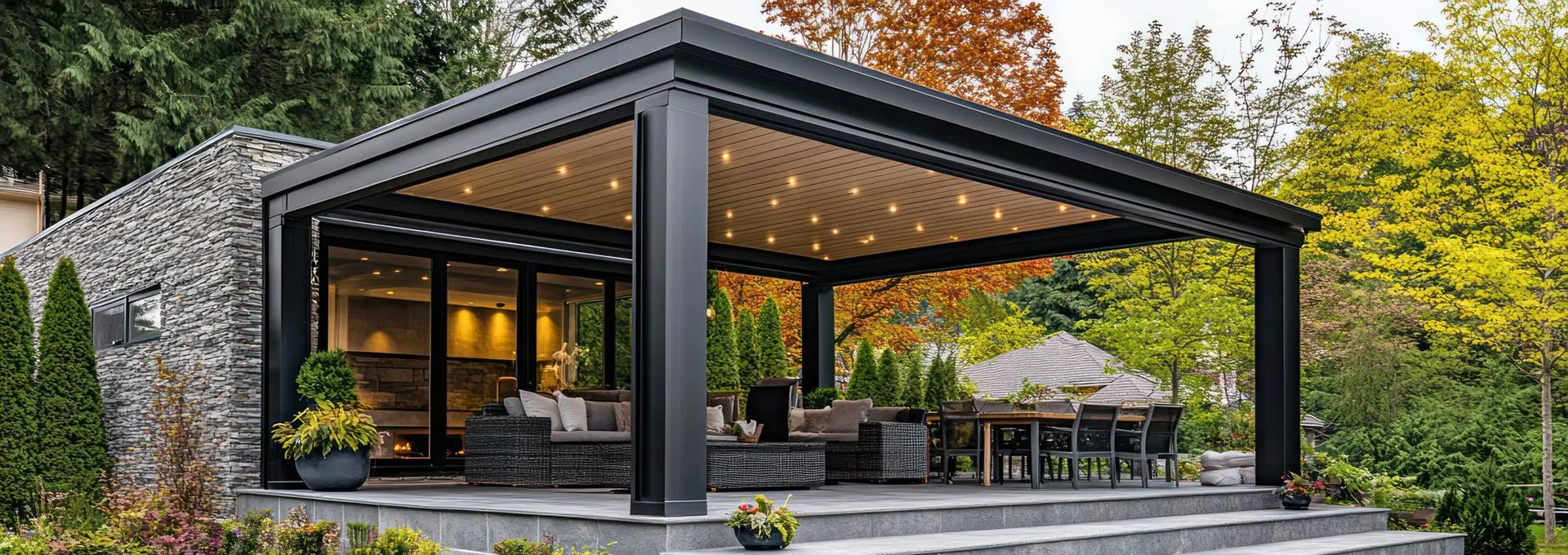
Gümüşhane Pergola and Bioclimatic Pergola
Gümüşhane appears in the Black Sea region on a map, but its climate resembles nothing on the coast. The Zigana and Kolan ranges hold back the humid air, leaving the province in a rain shadow behind them. The result is a dry, sunny climate with a wide temperature range.
That distinction matters for outdoor systems. A solution built around rain, as in Trabzon, is more than this province needs; here the real subjects are sun, dryness and the gap between day and night.
Why Pergola Systems Are Chosen in Gümüşhane
- Dry sun: With low humidity, shade produces fast and noticeable relief.
- Wide temperature range: Hot days and cool nights, so a side enclosure extends the season.
- Snowy winters: Altitude makes snow the determinant of the structural section.
- Tourism: Around the Karaca Cave and the high pastures, hospitality properties use outdoor space all year.
Bioclimatic Pergola Systems in Gümüşhane
In a dry, sunny climate the most-used feature of a louvred system is the shade angle. As the sun moves through the day the blade angle is turned and the shade stays over the table — a fixed canopy cannot do that and answers only one hour.
Where day and night differ this much, the second subject is evening use. In a place that reaches thirty degrees by day, the evening chill can empty a table. Planned together, a side enclosure and a heater keep the same area usable at night; a heater running in unbroken wind loses most of its output.
On snow the usual question applies: the closed-louvre load and the span it covers. At this altitude, that figure genuinely gets used.
Where Pergolas and Bioclimatic Pergolas Are Used
- Hospitality: Guest house terraces around the pastures and the cave.
- Garden homes: Seating and barbecue areas in the centre, Kelkit and Şiran.
- Cafés and restaurants: Terraces built for evening use in the city.
- Agricultural businesses: Drying and holding areas in mulberry and fruit-leather production.
- Public buildings: A sheltered line at the entrance.
Complementary Systems We Supply in Gümüşhane
- Zip screens: Cut the evening chill and, with a heater, extend the hours of use.
- Sliding glass: For heated winter volumes; double glazing and polyamide-broken profiles essential.
- Adjustable louvre angle: Keeps the shade in place all day in a dry, sunny climate.
- Glass wind screens: Break the plateau wind while leaving the view.
What a rain shadow means
When humid air meets a mountain range it rises, cools and drops its rain on the windward side. By the time it crosses the ridge it has dried out. Gümüşhane sits exactly in that position behind Zigana. The practical consequence: the large-section gutters and waterproof fabrics that are obligatory in Trabzon are unnecessary on most projects here, and the budget goes instead into shade control and evening enclosure. Two neighbouring provinces in the same region, two different priorities.
What drives the price
Area and span, system type, structural section, motors and automation, side enclosure. Here snow load capacity and, for evening use, enclosure and heater integration lead.
Why Elit Pergola?
- Budget matched to climate: We do not propose items a rain-shadow province does not need.
- Evening use planned: Enclosure and heating designed together.
- Snow figures in writing: Load capacity stated with the span it applies to.
- Our own installation team: Installation is never subcontracted.
- After-sales: Spare parts support continues for motors, louvres and fabric.
If you have a project in Gümüşhane, contact us for a free site visit.
Frequently Asked Questions
We are in the Black Sea region — should it be planned around rain?
Gümüşhane lies in a rain shadow and is far drier than the coastal provinces. The large gutters and waterproof fabrics that Trabzon requires are unnecessary on most projects here.
How can a terrace be used through the evening chill?
Plan the side enclosure and heater together. A heater running in unbroken wind loses most of its output.
The sun moves through the day — what is the answer?
Being able to turn the louvre angle. A fixed canopy answers only one hour; an adjustable system keeps the shade over the table all day.
What should I ask about snow loading?
Ask for the closed-louvre load capacity in writing, together with the span it applies to.
What do you suggest for a fruit-drying area?
A canopy that admits sun and closes when needed. Open louvres let drying continue; an unexpected shower closes them and protects the crop.