
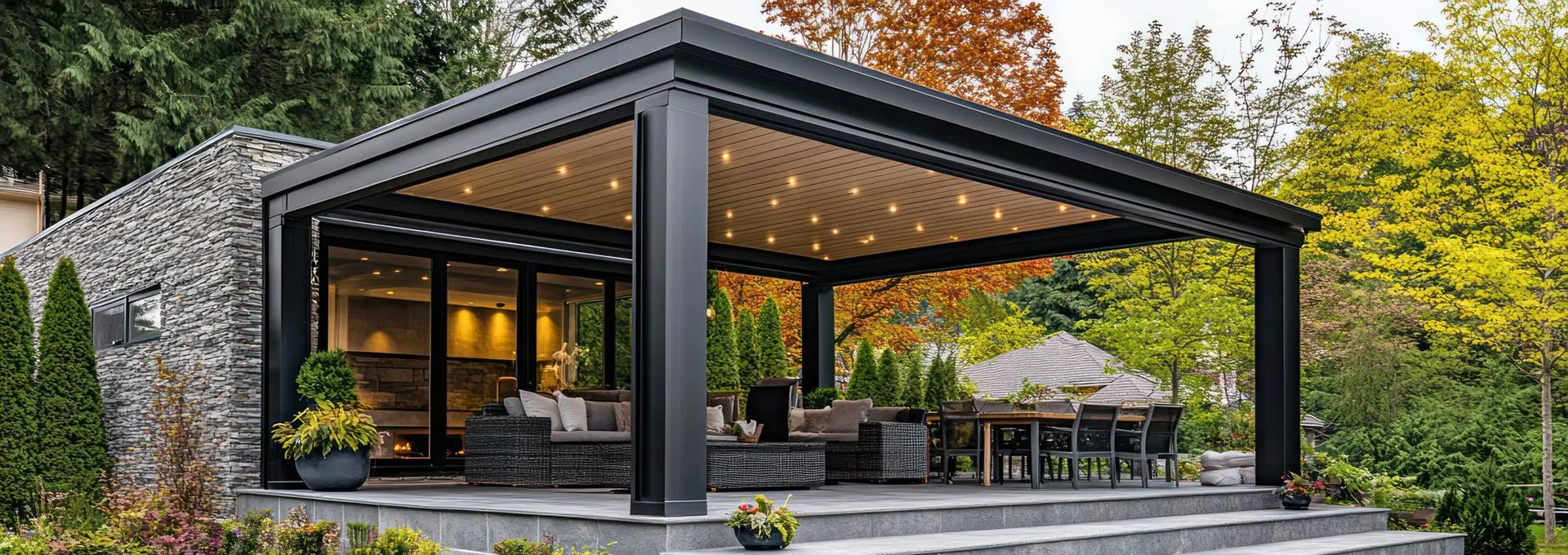
Burdur Pergola and Bioclimatic Pergola
Elit Pergola installs pergola, bioclimatic pergola and shading systems across Burdur — from walled gardens in the city to detached houses in Bucak and Gölhisar, administrative areas at marble plants, and businesses around the lake.
Burdur lies in a lake basin with a continental climate: summers are dry and hot, winters cold and snowy. Because the basin is enclosed, air movement is limited — which directly affects how shade has to be arranged.
Why Pergola Systems Are Chosen in Burdur
- Dry heat: With low humidity, shade produces fast and noticeable relief.
- Still air: Airflow in the basin is limited, so warm air is easily trapped under a solid cover.
- Continental winter: Winter use calls for side enclosure and heating planned together.
- Dust: With marble and farming activity nearby, dust makes side enclosures as necessary as shade.
Bioclimatic Pergola Systems in Burdur
Where still air dominates, the intermediate louvre position is decisive. Under a solid cover warm air has nowhere to rise; the gaps between the louvres release it, and the shade begins to produce coolness.
In winter the system is asked to work in reverse: opening the louvres lets winter sun in. In a province that sees snow, the closed-louvre load capacity should also be requested in writing; fabric-covered systems are not designed for snow.
Where Pergolas and Bioclimatic Pergolas Are Used
- Private gardens: Seating and barbecue areas in the centre, Bucak and Gölhisar.
- Lakeside businesses: Restaurant and café terraces.
- Marble and industrial plants: Administrative entrances, social areas and dispatch waiting zones.
- Institutional: Sheltered waiting areas at schools and public buildings.
- Agricultural businesses: Shaded working zones in packing and loading areas.
Complementary Systems We Supply in Burdur
- Zip screens: Cut dust and wind; mesh fabric lets air through, opaque fabric closes fully.
- Glazed systems: Double-glazed options for heated volumes.
- Windbreaks: Defining hospitality terraces and cutting dust.
- Double-opening awnings: Wide coverage with few posts across facility areas.
Maintenance intervals in an industrial setting
Where marble and farming activity are dense, dust accumulates quickly on upper surfaces and in gutters. That does not cause faults, but it shortens the maintenance interval: three thorough cleans a year instead of two, and four in heavily dusty locations. A blocked gutter reveals itself immediately in rain, which makes the pre-winter clean especially important.
What drives the price
Area and span, system type, number of posts and profile section, motors and automation, and the choice of side enclosure. Here snow load capacity leads, and in dusty settings the outlet and drainage detail.
Why Elit Pergola?
- On-site survey: Airflow, dust sources and ground assessed on site.
- Transparent quotation: Load capacity and drainage detail in writing.
- Specified for the setting: Shade, ventilation and dust addressed together.
- Our own installation team: Installation is never subcontracted.
- After-sales: Spare parts support continues for motors, louvres and fabric.
If you have a project in Burdur, contact us for a free site visit.
Frequently Asked Questions
Is shade enough in still air?
Not on its own. Because airflow in the basin is limited, warm air is trapped under a solid cover; on a louvred system the intermediate position releases it upwards.
How often is maintenance needed in a dusty setting?
The standard is two thorough cleans a year; where marble and farming activity are dense it becomes three, and four in heavily dusty locations. Clearing the gutters before winter matters most.
Is snow loading a problem in Burdur?
Snowfall occurs, so the closed-position load capacity should be requested in writing on louvred systems. Fabric-covered systems are retracted before winter.
Is enclosed winter use possible?
Yes. A glazed enclosure allows heating, with ventilation openings planned from the start for condensation.
How long does installation take?
Once made-to-measure production is complete, a standard terrace usually takes one or two days.