
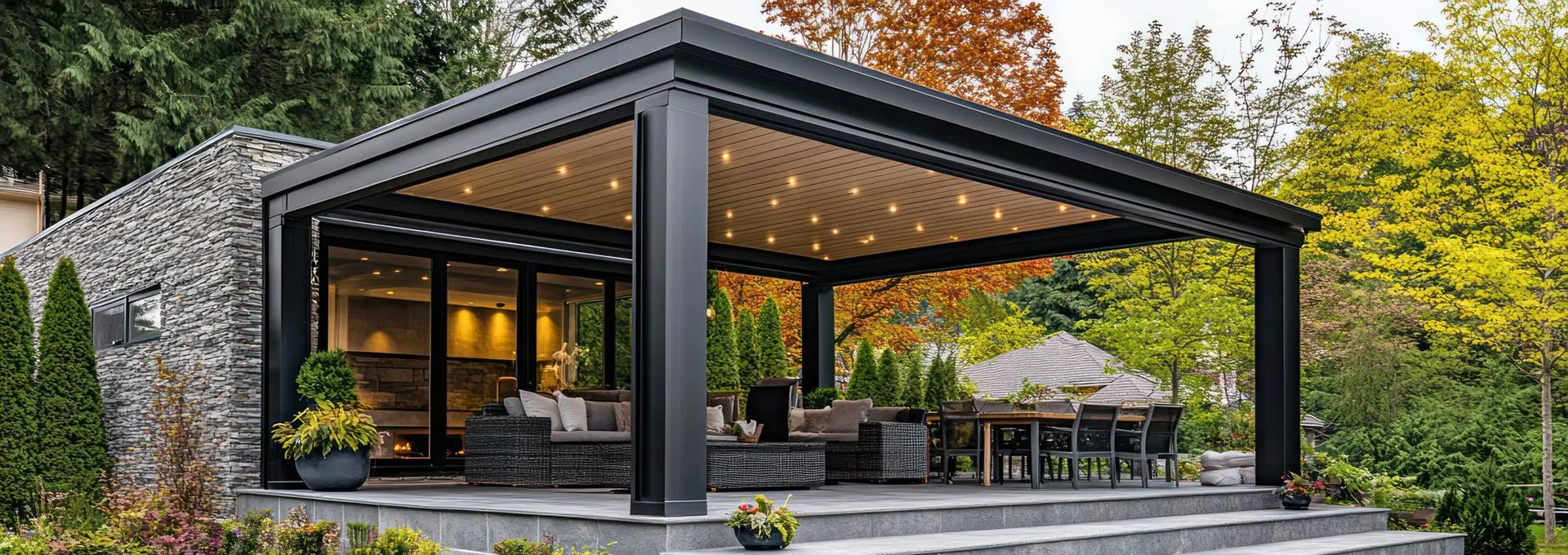
Karaman Pergola and Bioclimatic Pergola
Elit Pergola installs pergola, bioclimatic pergola and shading systems across Karaman — from walled gardens in the city to social areas at food and biscuit plants, packing buildings among the apple orchards, and detached houses in Ermenek and Sarıveliler.
Karaman sits on the northern edge of the Taşeli plateau in a dry, low-rainfall climate. Two things stand out: food manufacturing and fruit growing — and both shape the character of the work here.
Why Pergola Systems Are Chosen in Karaman
- Dry heat: With low humidity, shade produces fast and noticeable relief.
- Industrial scale: Food plants need sheltered social areas, entrances and dispatch waiting zones.
- Agricultural businesses: In fruit packing and loading areas, shade serves both worker comfort and the produce.
- Continental winter: Snow loading governs the structural calculation.
Bioclimatic Pergola Systems in Karaman
At agricultural and food sites what is expected is hygiene and ease of maintenance. An aluminium surface cleans easily, is unaffected by damp and does not hold dust; on a louvred system, access to the upper surface comes from moving the louvres fully open. That is a real advantage around food.
In a province that sees snow, the closed-louvre load capacity should be requested in writing. Where water discharges also matters in dispatch areas: water directed onto vehicle or pedestrian routes creates ice in winter.
Where Pergolas and Bioclimatic Pergolas Are Used
- Food and industrial sites: Canteen entrances, break areas, visitor and dispatch waiting zones.
- Agricultural businesses: Shaded zones in fruit packing, grading and loading areas.
- Private gardens: Seating and barbecue areas in the city and districts.
- Cafés and restaurants: Terraces in the city centre.
- Institutional: Sheltered waiting areas at schools and public buildings.
Complementary Systems We Supply in Karaman
- Zip screens: Cut wind and dust and protect produce in packing areas.
- Glazed systems: Double-glazed options for heated volumes.
- Windbreaks: Interrupting horizontal flow at plants and businesses.
- Double-opening awnings: Coverage with few posts across large loading and parking areas.
Cleaning access around food
At food plants and packing areas, how easily a system can be cleaned is part of the design. Reaching the upper surface by moving the louvres fully open, removable gutter strainers, and profiles without dust-collecting recesses are all subjects for the survey. They are difficult to resolve afterwards.
What drives the price
Area and span, system type, number of posts and profile section, motors and automation, and the choice of side enclosure. On facility projects, total covered area and cleaning access lead; on residential ones, snow load capacity.
Why Elit Pergola?
- On-site survey: Circulation, cleaning access and ground assessed on site.
- Transparent quotation: Profile section, load capacity and discharge points in writing.
- Facility experience: We recommend arrangements that are simple to clean and maintain.
- Our own installation team: Installation is never subcontracted.
- After-sales: Spare parts support continues for motors, louvres and fabric.
If you have a project in Karaman, contact us for a free site visit.
Frequently Asked Questions
Which system suits a food plant?
One that cleans easily and does not hold dust. Reaching the upper surface with the louvres fully open, and removable gutter strainers, should be discussed at survey.
Does shade in a packing area affect the produce?
It does. Direct sun raises the temperature of produce awaiting dispatch; a shaded grading and loading area protects both worker comfort and product quality.
Is snow loading a problem in Karaman?
Snowfall occurs, so the closed-position load capacity should be requested in writing for louvred systems.
How is icing prevented in dispatch areas?
The discharge point must run clear of vehicle and pedestrian routes and connect to a suitable drain.
How long does installation take?
Once made-to-measure production is complete, a standard terrace usually takes one or two days; at facility scale it depends on the number of areas.