
You have three quotations. One is nearly double another. The product name is the same, the area is the same, even the photographs look alike. Where is the difference coming from?
Usually the answer is not "one of them is expensive". The answer is that the two quotations are not describing the same job. This article breaks down the nine items that genuinely set a pergola price, what each line in a quotation actually means, and which omission comes back later as an invoice.
We deliberately publish no figures. Aluminium prices, exchange rates and motor costs move quickly; a rate written today misleads within three months. Instead we explain what builds the price — that does not go out of date.
Contents
- Why a rate per square metre misleads
- The nine items that set the price
- What a quotation must state in writing
- Costs that surface later
- Where to trim a tight budget, and where not to
Why a rate per square metre misleads
A square-metre rate measures only one dimension of the work. The variable that really drives cost is the span — the distance between posts.
Take 24 m². You can build it two ways:
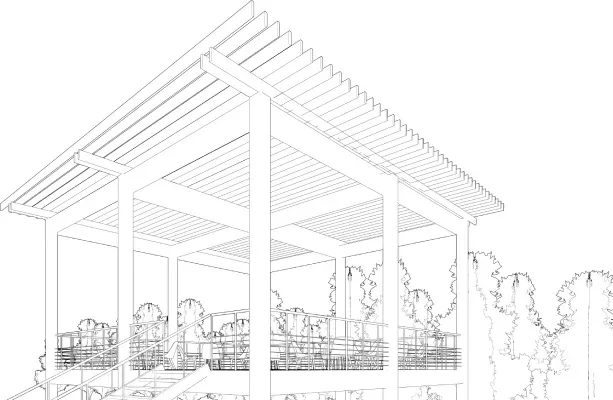
- 4 m × 6 m on four posts. Short beams, comfortable load paths, standard sections do the job.
- 3 m × 8 m on two posts, one edge fixed to the building. The same area, but an 8-metre span calls for heavier sections, stronger fixings and often a second motor.
The second arrangement costs markedly more, and a square-metre rate hides that completely. So the first question is not the price but "which section and how many posts are you solving this span with?"
The nine items that set the price
1. Span and structural solution
As above: the single most decisive item. A wide span means a larger profile section and heavier connections. A serious supplier can explain the section choice on its merits.
2. Profile section and wall thickness
Two aluminium profiles can look identical and carry different wall thicknesses. As thickness drops, so do both cost and load capacity. If the quotation states neither the section nor the wall thickness, you cannot compare anything.
3. Surface finish
Electrostatic powder coating is standard, but the coating thickness in microns and its exterior classification change the price. In salt-laden coastal air, ask about anodising or a higher-durability coating class. Cheap coatings dull within a few years and stain permanently.
4. Canopy type
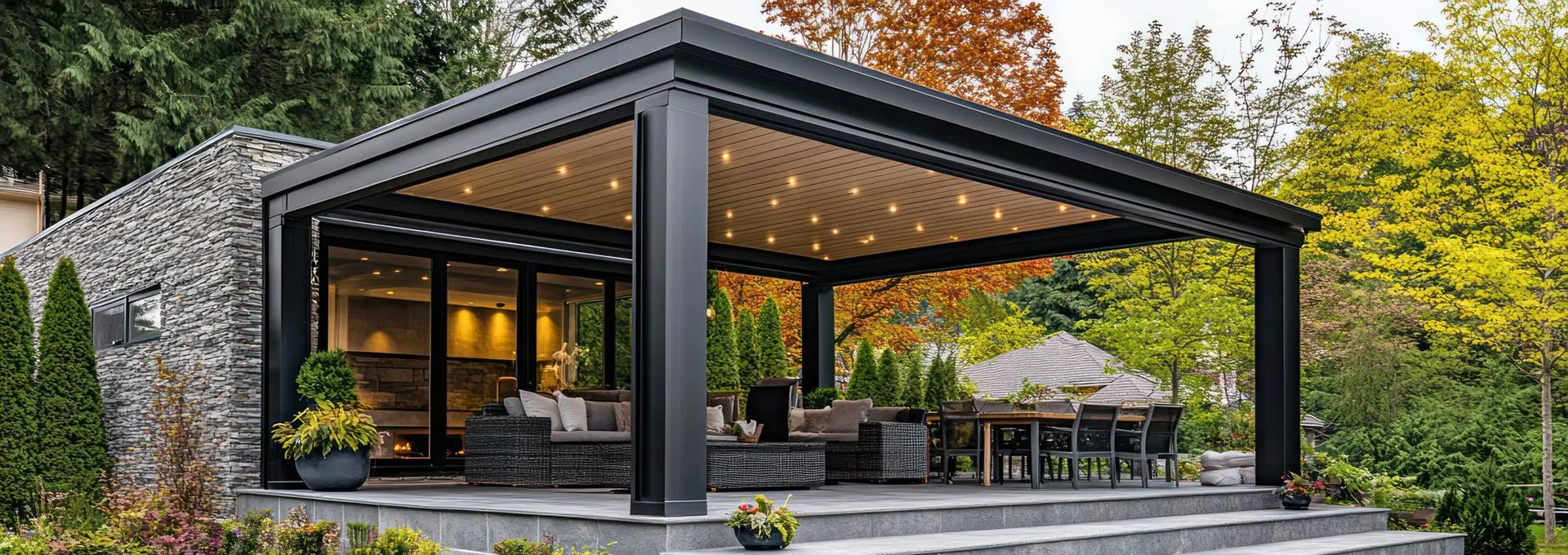
This sets the price band more than anything else. A louvred bioclimatic pergola is not in the same band as a fabric pergola awning; we compare the two, and which use suits which, in a separate article.
5. Motors, controls and automation
Motor brand and type, the number of channels on the handset, wind and rain sensors, smart-home integration — each is a separate item. "Motorised" on its own says nothing: how many motors, which type and what warranty should all be written down.
6. Drainage detail
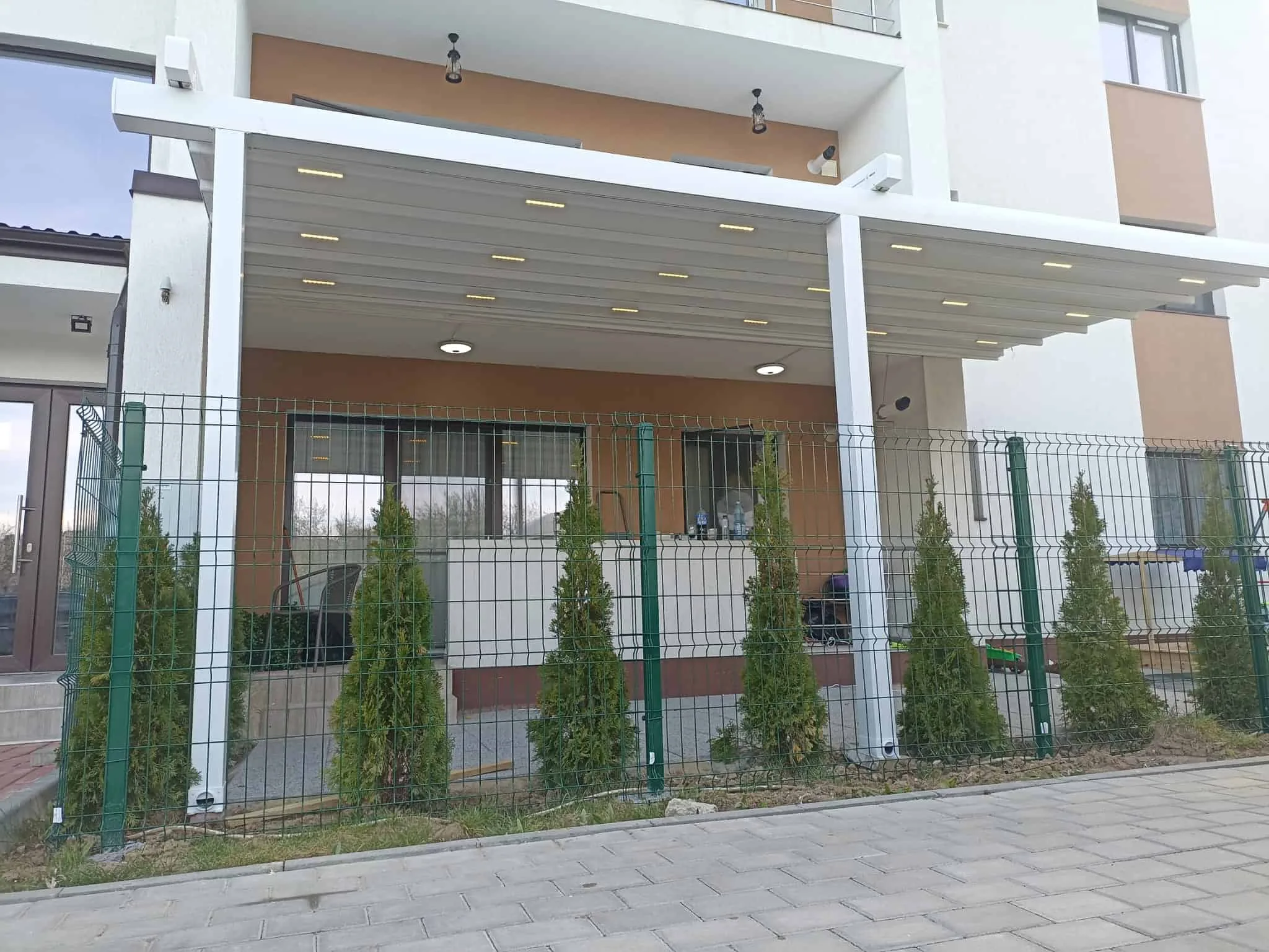
The most frequently skipped item and the most expensive to get wrong. Ask whether water runs through a concealed gutter inside the profile or down an external pipe, what the gutter section is, and where the downpipe inside the post discharges. Poorly resolved drainage returns years later as damp in a wall.
7. Side enclosures
If zip screens, sliding glass or guillotine glass are to be added later, the structure has to allow for them from the outset. When it does not, you pay in extra profiles, extra fixings and a loss of visual coherence.
8. Lighting and heating
Recessed LED strips, spotlights, heaters and speakers move the total noticeably. They can be retrofitted, but leaving the cable routes in place from the beginning is both cheaper and tidier.
9. Installation conditions
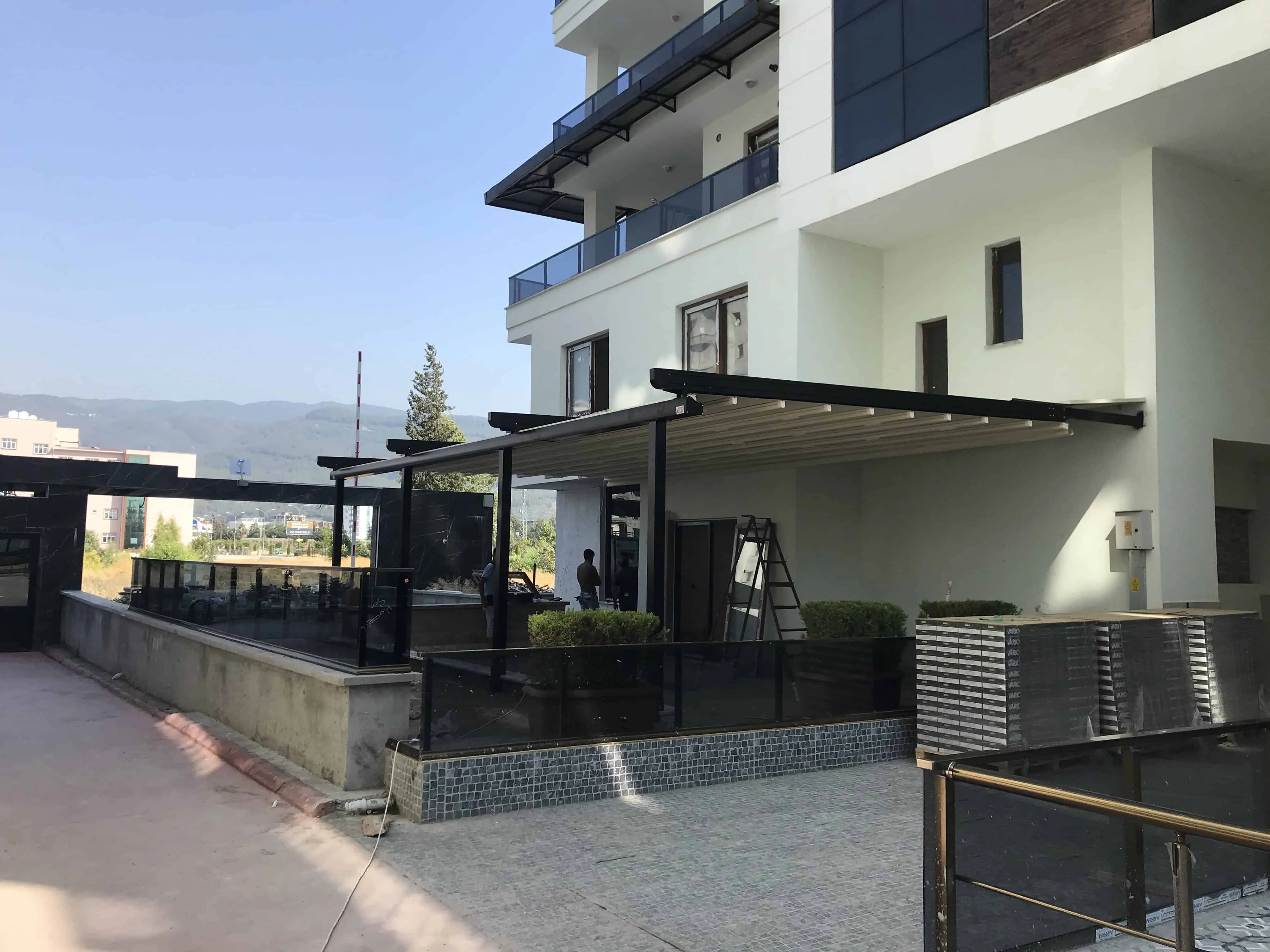
Floor levels, the type of connection to the existing building, whether a crane is needed, working height and site access. A system going up to the eighth floor does not carry the same installation cost as one at garden level. A price given without a site visit is estimating this item.
What a quotation must state in writing
What makes quotations comparable is not the price line but the specification lines. If the following are missing, two quotations may not be describing the same job:
| Item | What the quotation should state |
|---|---|
| Dimensions | Clear width × depth, number and position of posts |
| Profile | Section size and wall thickness |
| Finish | Coating type, micron value, RAL reference |
| Canopy | Louvre type or fabric name, weight and warranty period |
| Motors | Quantity, type, warranty; manual override yes or no |
| Drainage | Gutter arrangement and discharge point |
| Installation | Fixing type, works included, crane or scaffold |
| Programme | Manufacturing plus installation dates |
| Warranty | Product and workmanship stated separately |
Costs that surface later
The items that really upset a budget are the ones absent from the first quotation:
- Electrical supply. Running a circuit for motors and lighting is usually excluded.
- Ground preparation. Post foundations, concrete strengthening, or lifting and relaying existing paving.
- Work to the existing building. Cutting through external insulation, reworking an eaves detail, moving a rainwater gutter.
- Consents and confirmations. In commercial settings, pavement licences or a management company decision cost time and sometimes money. We cover the permit side in a separate article.
- Delivery and access. Narrow streets, buildings without lifts, crane requirements.
Where to trim a tight budget, and where not to
Every project has a limit. The right question is not "what can I cut" but "what can I postpone".
Safe to postpone:
- Lighting and heaters — straightforward to add later if the cable routes exist.
- Part of the side enclosure — elevations can be closed in stages if rail positions are allowed for.
- Automation and sensors — retrofit easily where the motor is compatible.
Never trim:
- Structural sections. They cannot be changed later without dismantling the system.
- The drainage arrangement. You cannot cut a gutter into a profile after the fact.
- Surface finish. On-site repainting does not match factory quality.
- Fixings and installation labour. This is where the safety of the system lives — the worst possible saving.
In short
The way to understand the gap between two quotations is to read the specification lines, not the price line. If section size, wall thickness, fabric weight, motor type and drainage arrangement are not written down, you do not have comparable quotations — you have two numbers.
At Elit Pergola we set all of these out in writing after a site visit, and explain why we chose a given section before anyone asks. Browse the options on our products page, then get in touch with your dimensions and intended use.