
On an awning quotation the expensive line is the structure — but dissatisfaction almost always traces back to the fabric. Faded colour, sagging, mould staining, water coming through in rain: all of it follows from the fabric decision, and that decision usually gets one line in the quotation.
This article compares the three main families — acrylic, PVC-coated polyester and plain polyester — under technical headings, explains what fabric weight and UV resistance actually mean, and sets out which suits which use.
Contents
- Three fabric families
- Why colour fades: the dyeing method
- Fabric weight: is heavier always better?
- UV resistance and waterproofing
- Side by side
- Which fabric for which use?
- Cleaning and extending life
- Five things to look for in a quotation
Three fabric families
Woven acrylic
Widely treated as the standard for exterior awnings. The yarn is woven rather than coated, so the fabric itself carries the colour. It breathes — warm air does not build up underneath. It offers high UV resistance and long-term colour stability.
PVC-coated polyester
A polyester base cloth carries a PVC coating. Waterproofing is high and the surface wipes clean. It does not breathe, which can be a drawback in an enclosed volume but becomes an advantage where rain and dirt are the concern.
Plain polyester
The most economical option. Light and easy to roll, but it does not stand up to UV as well as acrylic and colour stability is lower. It suits short-life or seasonal applications.
Why colour fades: the dyeing method
This is the least understood and most decisive subject in the whole discussion. There are two methods:
- Solution dyeing. Pigment is added to the melt while the yarn is still being made, so the colour lives in the core of the fibre rather than on its surface. Even as the fabric wears, no different colour appears underneath.
- Piece dyeing. The woven fabric is dyed afterwards. It looks identical in year one; under UV, the surface pigment lightens over time and fading begins.
This is the real reason acrylics lead outdoors: quality acrylics are generally solution-dyed. The question for the quotation is simple: "Is the fabric solution-dyed?"
Fabric weight: is heavier always better?
Fabric weight (g/m²) is often described in quotations as "thickness". For exterior awnings, 280–340 g/m² is treated as the balanced range.
Heavier is not automatically better:
- Heavier fabric holds steadier in wind and resists sagging — but rolls to a thicker coil and enlarges the cassette.
- Lighter fabric rolls neatly into a slimmer cassette — but moves more in wind and tires faster.
So the weight is chosen with the system, not independently of it. On a long-armed folding-arm awning, light fabric sags; on a small shop awning, heavy fabric enlarges the cassette for nothing.
UV resistance and waterproofing
UV resistance
Sun protection is usually expressed as a UPF value. For exterior use, UPF 50+ is the sensible specification; it makes a noticeable difference to how cool the space beneath feels.
UV resistance affects two things at once: your comfort underneath, and the life of the fabric itself. A fabric with weak UV resistance does not merely fade — the fibre structure tires and loses tensile strength over the years.
Waterproofing
Care is needed here, because one word covers two different properties:
- Water repellent. Acrylics generally carry a water-repellent finish. In brief rain, water beads and runs off; in prolonged heavy rain the fabric can wet through.
- Waterproof. On PVC-coated fabrics the coating stops water entirely. This is what you want where the space will be used in rain.
A critical detail: even a waterproof fabric can leak at the seams. On wide awnings, high-frequency welded seams give a far safer result than stitched ones.
Side by side
| Criterion | Woven acrylic | PVC-coated polyester | Plain polyester |
|---|---|---|---|
| Colour stability | Very high if solution-dyed | High | Moderate |
| UV resistance | High | High | Moderate |
| Water | Repellent; can wet through in prolonged rain | Waterproof | Limited |
| Breathability | Yes — no heat build-up underneath | No | Partial |
| Cleaning | Brush and warm water; can hold stains | Wipes clean | Brush and warm water |
| Typical use | Café terraces, balconies, domestic awnings | Pergola canopies, winter gardens, industrial | Seasonal and budget applications |
Which fabric for which use?
Balcony and terrace awnings
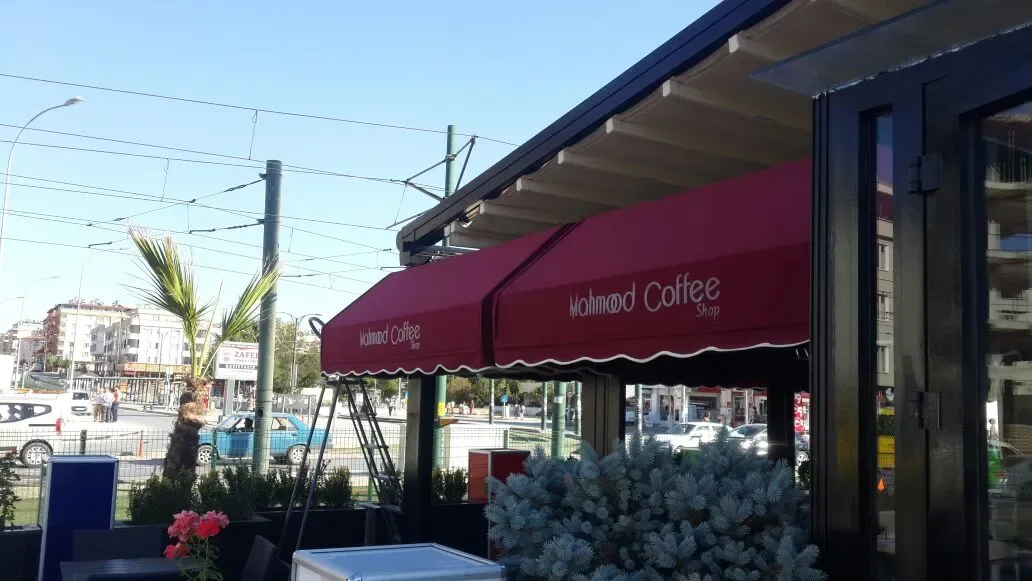
Acrylic. Breathability makes a real difference to comfort underneath on hot days, and colour stability matters on a domestic elevation.
Pergola canopies
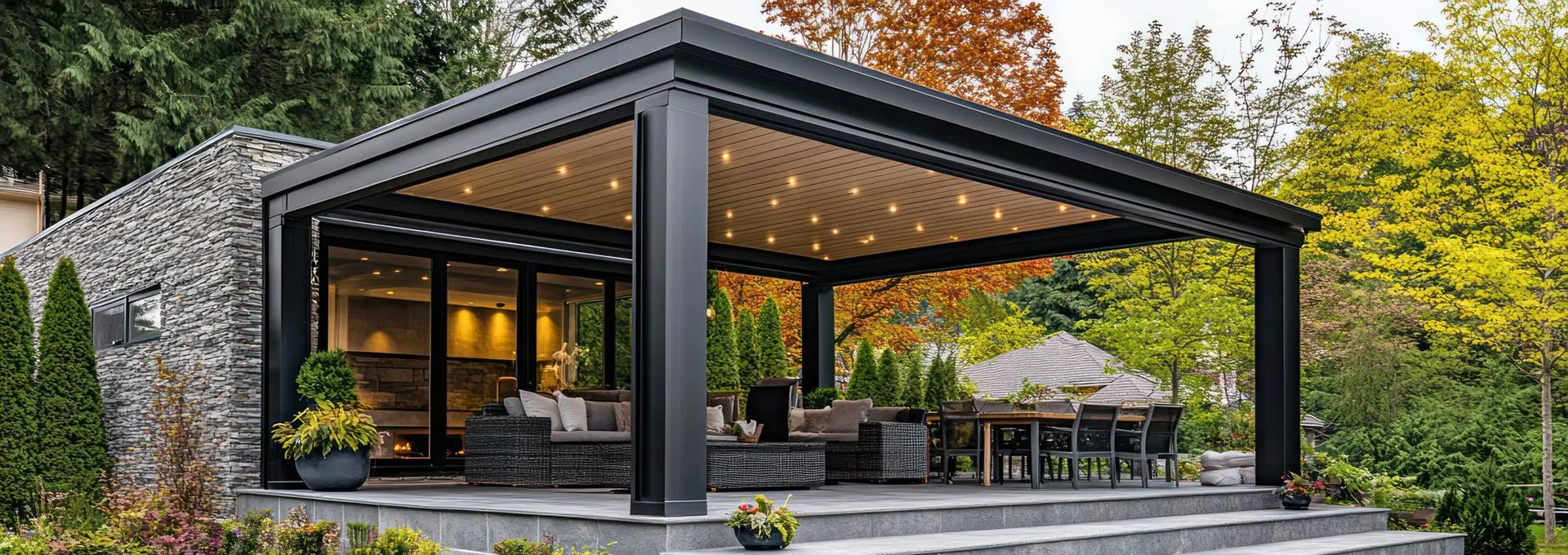
PVC-coated polyester. On a tracked system the fabric has to stay taut and shed water; a coating delivers that reliably. Pergola awning systems generally use this family.
Shopfronts
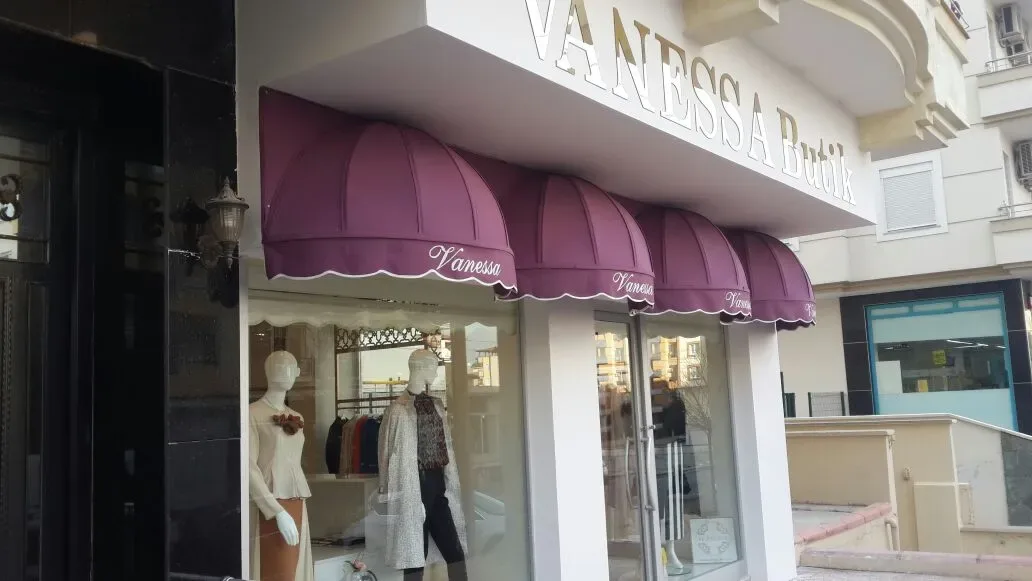
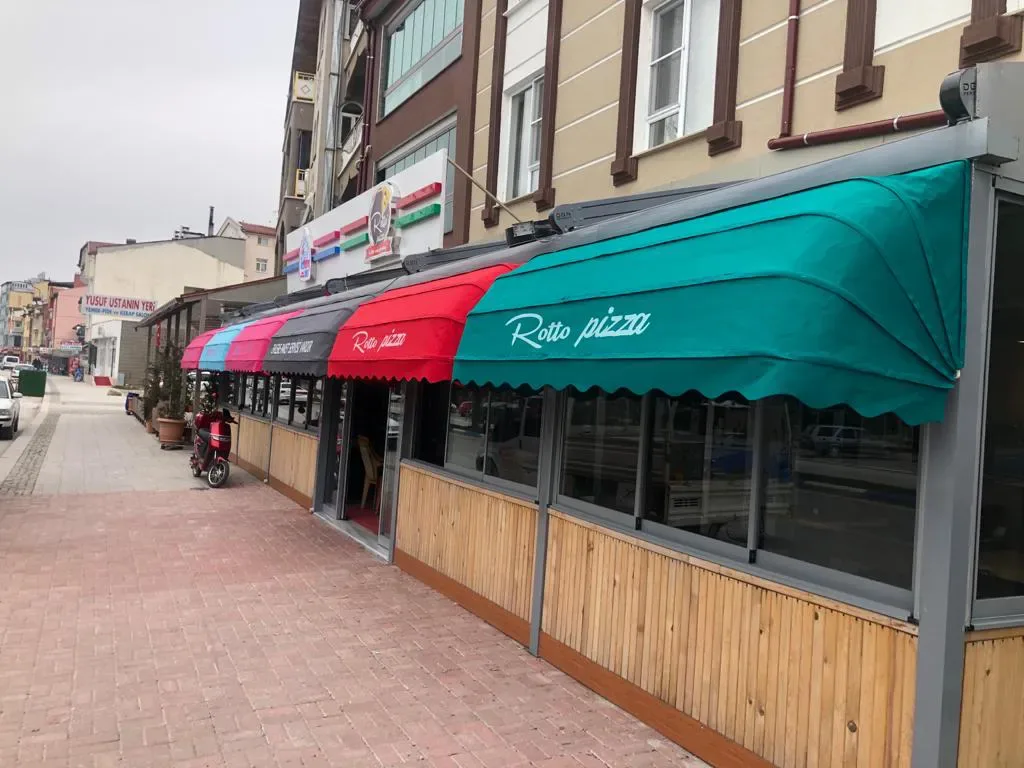
Acrylic or PVC — printing usually decides it. Where branding is applied, a PVC surface holds print more crisply. On decorative awnings, fabric colour and valance profile are chosen together.
Exposed elevations
The heavier option, whichever family. On armed systems, a wind sensor protects the fabric better than any specification does.
Spaces left open year-round
PVC-coated polyester. This family stands up best to repeated wetting and drying, which is why it appears in winter arrangements such as Wintent awning systems.
Cleaning and extending life
What extends fabric life is not an expensive product but the right habits:
- Never roll it up wet. This is the number one way to shorten fabric life. Fabric rolled away damp grows mould inside the cassette and the staining is permanent.
- No pressure washers. They strip the water-repellent finish, and it does not come back.
- No solvents or bleach. Both damage colour and coating. Warm water, a soft brush and, if needed, a neutral soap are enough.
- Dust it down once a year. Dust sitting on fabric turns to mud in rain and leaves marks.
- Check more often under trees. Leaves and resin can mark an acrylic surface permanently.
Five things to look for in a quotation
- Fabric name and range. "Acrylic fabric" is not enough; the manufacturer and range should be stated.
- Dyeing method. Solution-dyed or piece-dyed?
- Weight in g/m². Is it in a range that suits the system?
- UPF value. Is it 50+ for exterior use?
- Warranty period and scope. Does it cover fading, or only seams and manufacturing defects?
Two quotations missing these five lines may not be describing the same job — we make the same argument for the structural side in our guide to reading a quotation.
In short
Fabric choice comes down to three questions: Will the space be used in rain? Does air movement underneath matter? How long must the colour hold? Rain points to PVC, comfort points to acrylic, and a tight budget with seasonal use points to polyester — and in all three cases, ask about the dyeing method.
At Elit Pergola we choose the system and the fabric together, settling which family suits your use during the site visit. Look through folding-arm awnings, double-opening awnings and decorative awnings, then get in touch.