

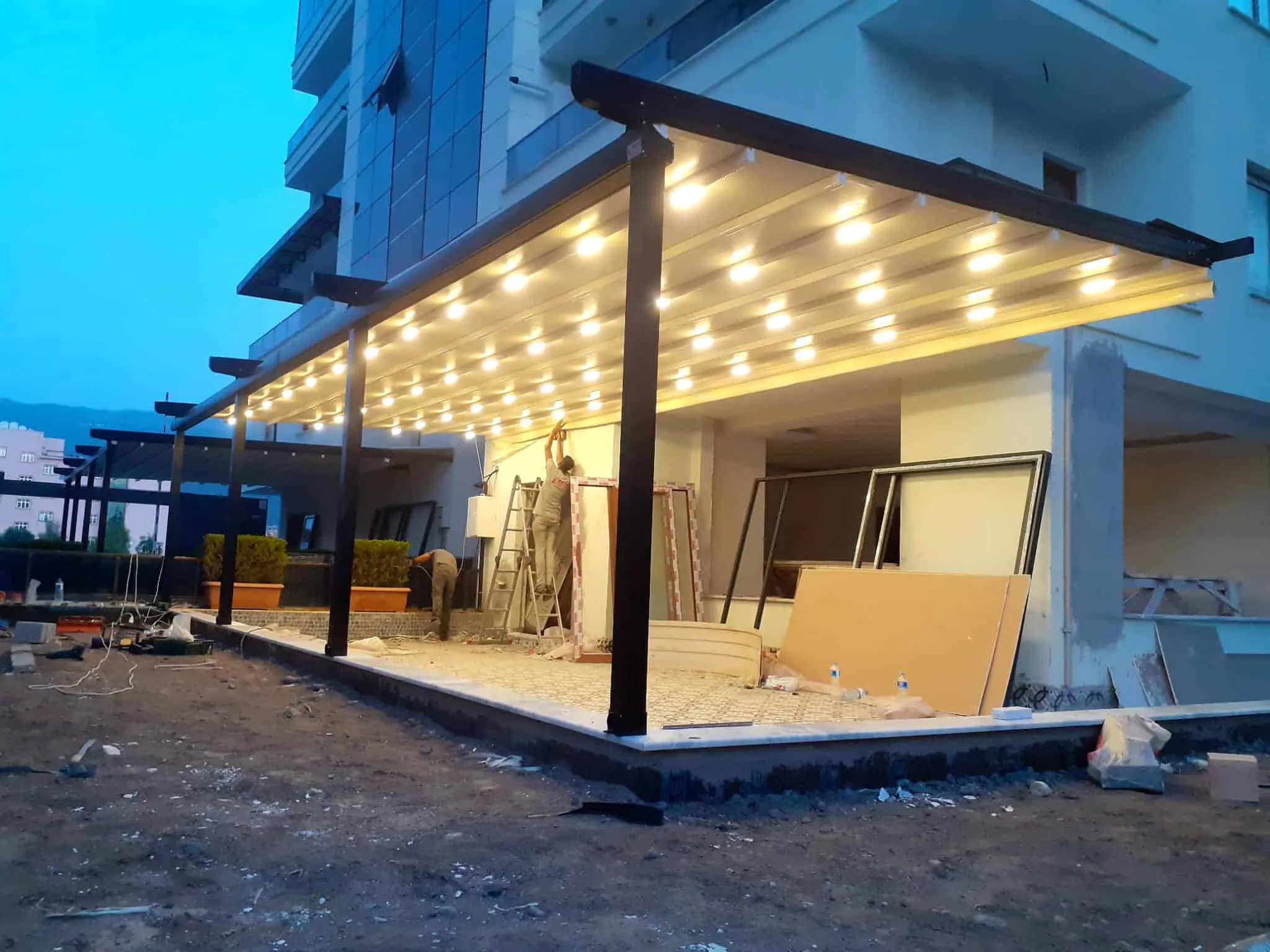
Service records for pergolas and awnings show something striking: the great majority of faults come not from a mechanical defect but from accumulated dirt. A blocked gutter, leaves packed into a channel, fabric rolled away wet.
That is good news, because nearly all of it is preventable, and prevention takes a few hours a year. This article is a practical checklist for inspecting your system at the turn of each season.
Contents
- Why faults happen
- An annual maintenance calendar
- Drainage: the single most important item
- Fabric systems
- Louvred systems
- Glazing and zip screens
- Motors and automation
- A ten-point list before winter
- When to call a service engineer
Why faults happen
Outdoor systems are exposed to three things continuously: dust, water and sun. Each is harmless alone; together they cause trouble.
- Dust plus water equals mud. Dust settling in channels and gutters turns to mud in rain and blocks the flow.
- Water plus an enclosed space equals mould. Fabric rolled away wet cannot dry inside the cassette, and the staining becomes permanent.
- Sun plus movement equals fatigue. A gasket hardened by UV cracks a little more with every cycle.
The point of maintenance is to keep those three apart: remove dirt before it builds, keep the water route clear, and let moving parts run clean.
An annual maintenance calendar
| Period | What to do |
|---|---|
| Spring, at the start of the season | General clean, gutter check, fabric inspection, test run of the motor, gasket check |
| Midsummer | Dust down; check for leaves and resin if the system sits under trees |
| Autumn, preparing for winter | Thorough clean, clear gutters and outlets, roll the fabric away dry, set the sensors, retract the system if required |
| Midwinter | Visual inspection after storms and heavy rain |
This calendar suits most systems. Under trees, near the sea or in heavy commercial use, the frequency should increase.
Drainage: the single most important item
If only one maintenance task could be chosen, it would be this. A blocked gutter does more than drip: water sits inside the profile, freeze-thaw cycles work on it through winter, and in the long run it shows up as damp in a wall.
How to check:
- Move the canopy to the closed position.
- Inspect the gutter mouths and outlets; leaves, seeds and birds' nests are the usual finds.
- Locate where the downpipe inside the post discharges and check it is clear.
- Pour a bucket of water through and watch the flow — this test finds blockages that a visual inspection misses.
- If it drains slowly, clear it with compressed air or a flexible brush; never use stiff wire, which scratches the coating.
We cover the role of drainage in system selection in our bioclimatic pergola versus pergola awning comparison.
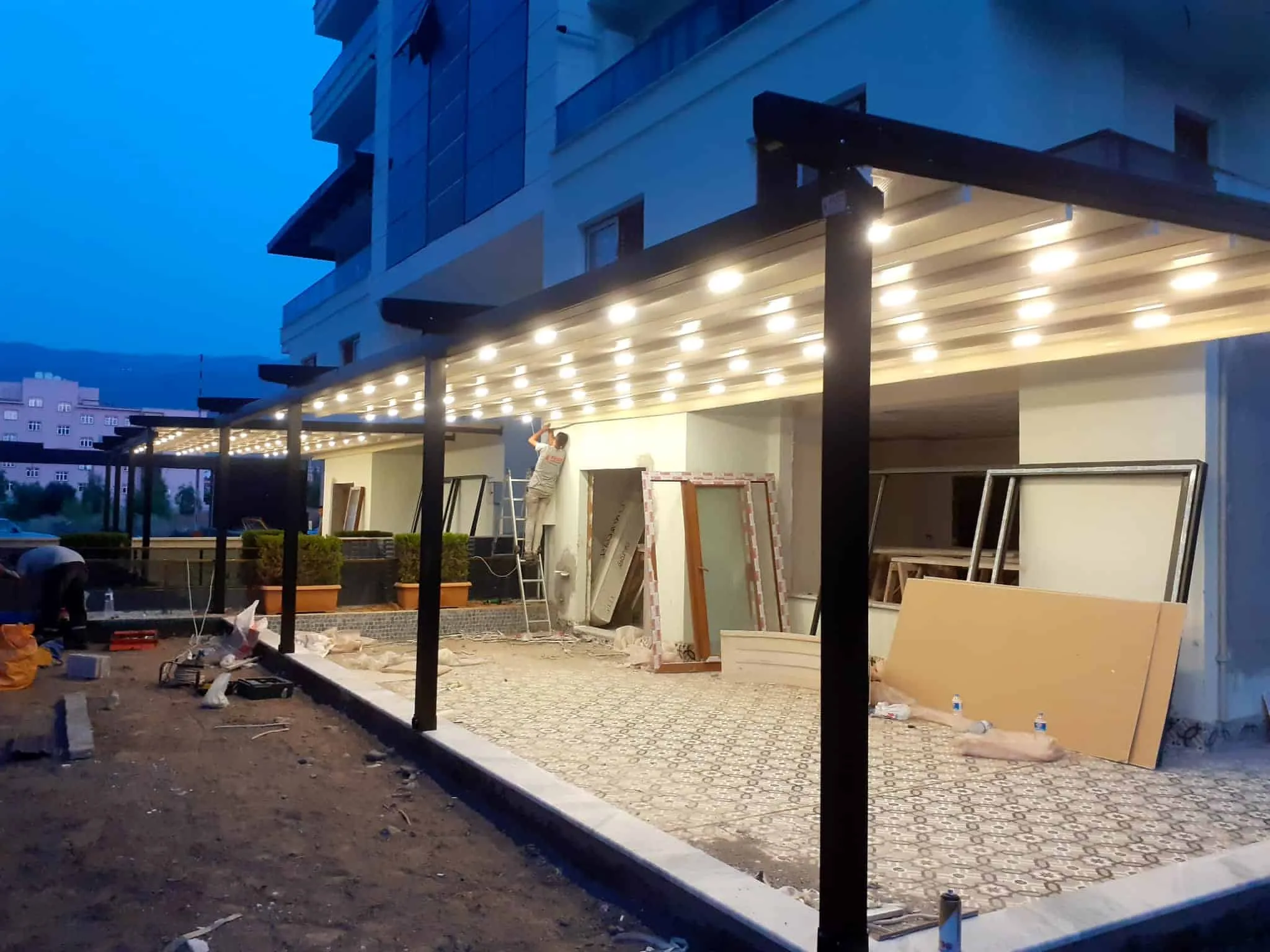
Fabric systems
For pergola awnings, folding-arm awnings and decorative awnings:
- Never roll it away wet. This is the single most important rule. After rain, leave the fabric out to dry.
- Use warm water and a soft brush. Pressure washers, solvents and bleach strip the water-repellent finish.
- Check the seams. Caught early, a failing seam saves the fabric.
- Watch the tension. Sagging in the middle means the fabric has tired or the tension setting has drifted.
- Inspect more often under trees. Resin and leaf staining can be permanent on acrylic.
We cover the maintenance differences between fabric families in our fabric guide.
Louvred systems
On a bioclimatic pergola and similar systems:
- Check the louvre gaskets. A hardened or displaced gasket means leaks in the closed position.
- Clean with the louvres fully open. It is the only way to reach the upper surfaces.
- Listen to the rotation mechanism. Clicking or straining says maintenance is due.
- Lubricate only where the manufacturer specifies. Spray oil applied at random attracts dust and makes things worse.
Glazing and zip screens
For sliding glass, guillotine glass and zip screens the rule is shared: whatever moves needs a clean channel.
- Bottom tracks and zip channels. Dust and grit collect here and shorten the life of rollers and zips. A vacuum with a narrow nozzle works well.
- Gaskets. Hardened gaskets both leak and increase friction. On systems with replaceable gaskets this is an easy job.
- Glass edges. Chips at the polished edge can turn into cracks over winter and should be spotted early.
- Zip fabric. Check that the edge profile runs through the rail without catching.
Motors and automation
- Run a test cycle at the start of the season. A motor unused all winter can strain on first use.
- Check the limit settings. A drifted limit works the system a little harder every cycle.
- Test the sensors. Wind and rain sensors stop responding once covered in dust; clean the surface and confirm they trigger.
- Change the handset battery. A weak battery is a surprisingly common cause of what gets reported as "motor failure".
- Try the manual override once. The moment you need it is the worst time to learn how it works.
A ten-point list before winter
- Clear gutters and outlets, and test the flow with water.
- Dry the fabric completely before rolling it away.
- Remove leaves from the upper surfaces.
- Check gaskets and note any that have hardened.
- Clean and test the wind and rain sensors.
- Run the motor through a full cycle and listen for changes.
- Retract fabric-covered systems if snow is expected.
- Clean the bottom channels of side enclosures.
- Visually inspect lighting and heater connections.
- Look for loosening, corrosion or cracks at fixings and connections.
The list takes about an hour and typically prevents most in-season faults.
When to call a service engineer
The following sit outside user maintenance:
- A change in motor noise, or a system that moves in stages.
- Leaks in the closed position that cleaning the gaskets does not resolve.
- Cracks, deformation or loose fixings in the structure — a safety matter, and not one to postpone.
- A tear starting in the fabric. Early attention saves it; late attention replaces it.
- Chips or cracks at a glass edge.
In short
Outdoor systems are durable, but not against neglect. Two thorough inspections a year — in spring and autumn — extend service life noticeably. If only one habit is adopted, make it this: keep the gutter clear and never roll fabric away wet.
Elit Pergola provides maintenance and service support for the systems we install. If you have noticed a change in yours, or want help preparing for winter, get in touch. If you are planning a new system, browse the options on our products page.