
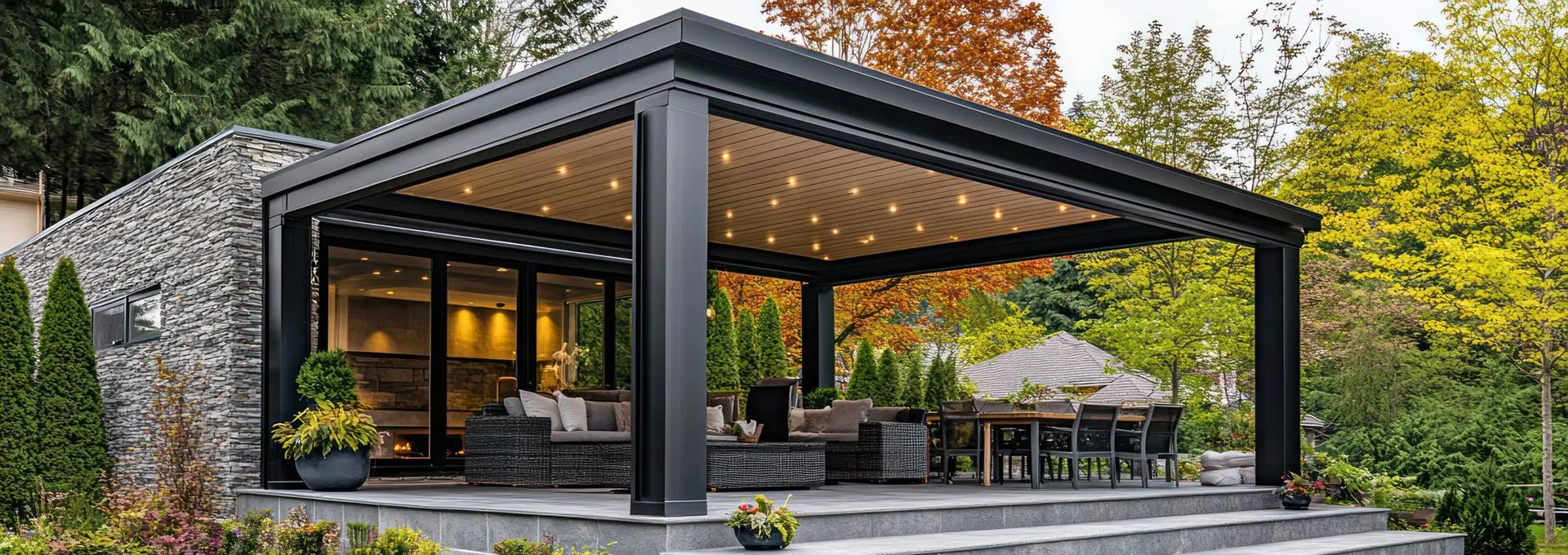
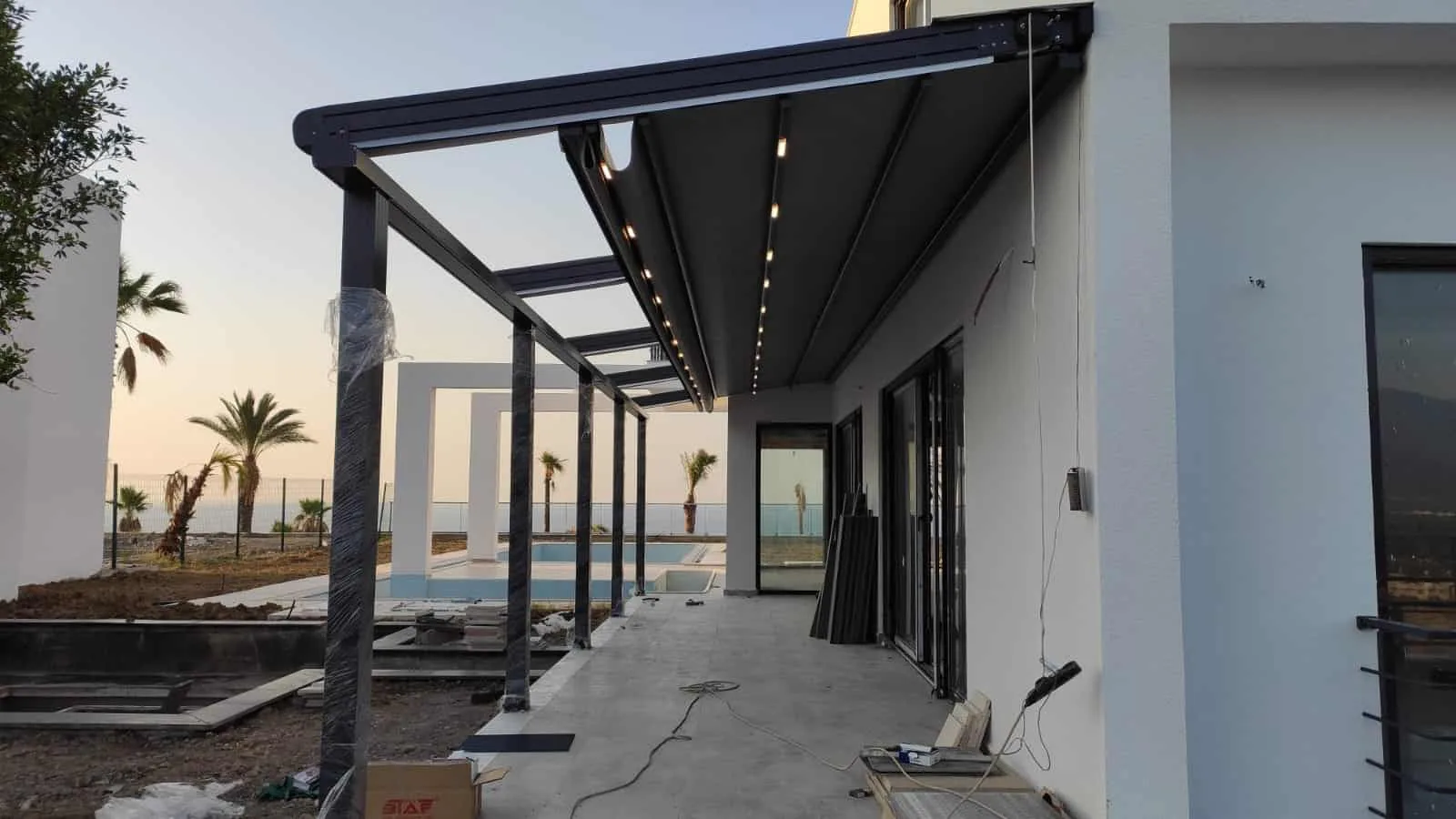
Shading systems are always sold with the same sentence: "It saves energy." Almost nobody gives a number. Yet measured, published and repeated research exists on this — and the figures are far more persuasive than the sentence.
This article sets out how much external shading reduces cooling load, why orientation matters so much, why external shading beats internal blinds by a wide margin, and what all of it means in a Mediterranean climate.
Contents
- Heat comes in through the glass
- What the research says
- Why external shading beats internal blinds
- Orientation changes the answer
- Which system does which job?
- What it means in a Mediterranean climate
- Do not forget winter: the gain works both ways
- Seven practical decisions
Heat comes in through the glass
A building heats up in summer not mainly because of the outside air temperature but because of solar radiation coming through the glass. Walls can be insulated and roofs can be insulated; glass admits the sun almost directly.
According to a study by the American Society of Heating, Refrigerating and Air-Conditioning Engineers (ASHRAE), solar radiation through glass accounts for roughly 20% of the load on an air-conditioning unit. In other words, your air conditioner spends a fifth of its energy pushing back out the sunlight that came in through the window.
That is the starting point of the whole discussion: stop the heat before it arrives rather than removing it afterwards.
What the research says
The figures below come from studies in different climates using different methods. None is a guarantee for your building; together they indicate the order of magnitude.
| Measurement | Result |
|---|---|
| Effect of a fabric awning on heat gain through south-facing glass | 55–65% reduction during hours of direct sun |
| The same measurement on a west elevation | 72–77% reduction |
| Share of air-conditioning load from solar radiation through glass (ASHRAE) | Approximately 20% |
| Annual energy reduction from external shading in commercial buildings (Houston case) | 30% east, 27% west, 21% south |
| Range of cooling load reductions across contexts | 27.5% – 64.5%; up to 74% in overheating cases |
Sources: a US Department of Energy technical report on exterior shading in commercial buildings, and an academic study on year-round thermal comfort in hot climates.
An important caveat: all of these figures apply to external shading. Internal blinds and applied films deliver much smaller effects, for the reason set out below.
Why external shading beats internal blinds
The physics is simple: a sunbeam does not turn into heat when it hits the glass. It passes through, strikes the surfaces inside, and becomes heat there. That heat is now long-wave and cannot get back out through the glass — which is exactly the greenhouse effect.
- An internal blind stops the beam after it has passed the glass. The heat is already inside; the blind only changes where it lands. The blind itself warms up and radiates into the room.
- External shading intercepts the beam before it reaches the glass. The heat never enters; whatever warms up does so outside, where the wind carries it away.
That is why the same fabric hung outside the glass is many times more effective than hung inside it. It is also the entire logic of investing in shading.
Orientation changes the answer
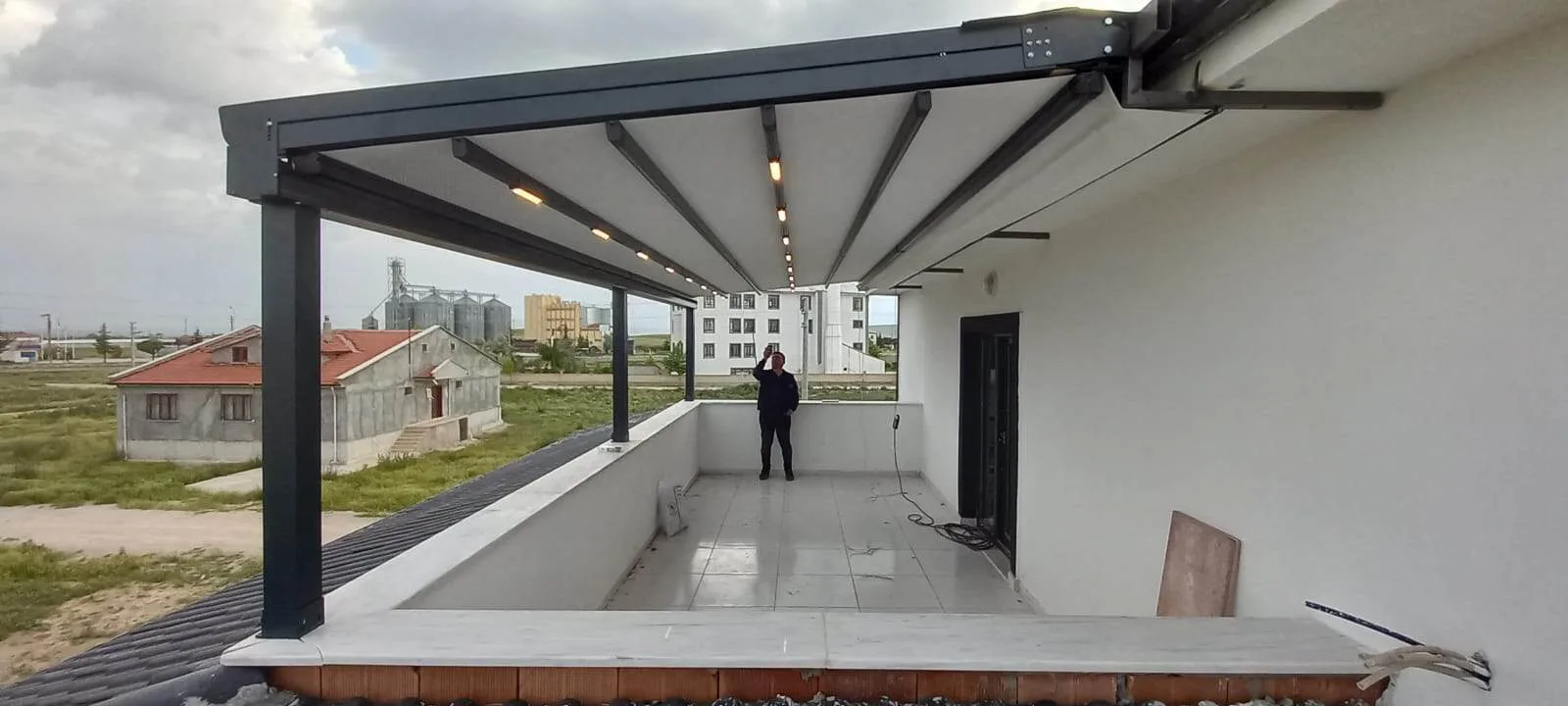
What stands out in the table above is that the same system performs differently on different elevations. The reason is the angle at which the sun arrives:
- South. In summer the sun is high, so a horizontal shading element — pergola, awning, overhang — works very efficiently. In winter, as the sun drops, the same element lets light through. That is a gain, not a flaw.
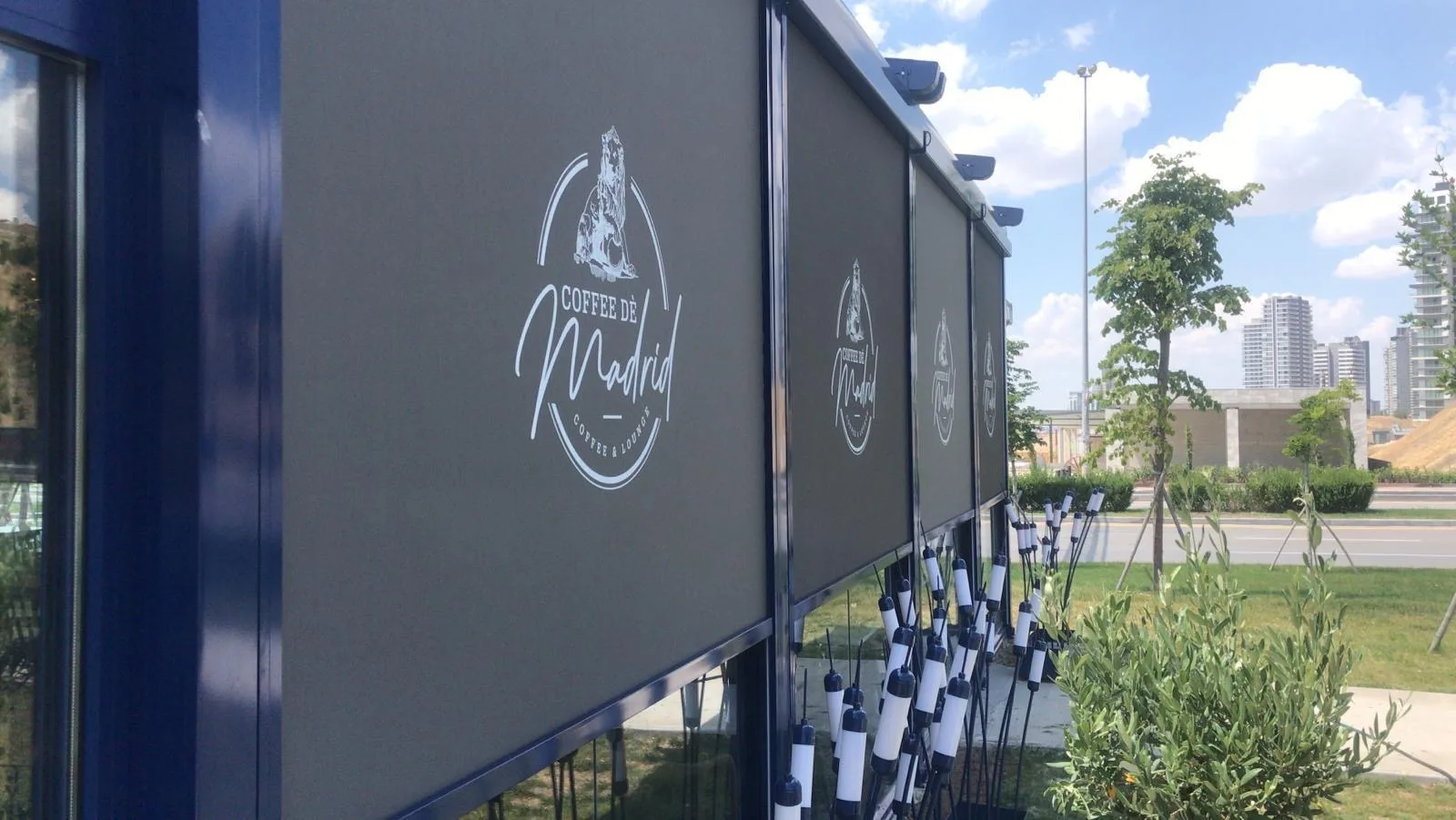
- West. The hardest elevation. Afternoon sun arrives low and at full strength; horizontal shade is not enough and vertical enclosure is required. Zip screens and vertical blinds outperform horizontal systems here.
- East. The same problem in the morning at lower intensity. It matters for commercial spaces that open early.
- North. Direct solar radiation is limited; shading here is about comfort, not energy.
In practice: a decision to "put up a pergola" is incomplete until it meets the orientation. A horizontal cover alone will not solve a west-facing afternoon.
Which system does which job?
| System | What it does | Most efficient on |
|---|---|---|
| Bioclimatic pergola | Horizontal shade with stepped control; warm air escapes through the louvres | South, south-west |
| Pergola awning | Horizontal shade; retracting the fabric lets winter sun in | South |
| Zip screens | Vertical enclosure; intercepts low-angle sun | West, east |
| Folding-arm awning | Shade directly in front of the glass, without posts | South, west, at window scale |
The ventilation factor: shade alone is not enough. Warm air stagnates beneath a solid cover, and the shade then fails to lower the perceived temperature as much as expected. This is where louvred systems and breathable acrylic fabrics have the advantage — we cover fabric selection in a separate article.
What it means in a Mediterranean climate
Most of the research above was carried out in temperate and warm climates. The Mediterranean coast sits at the hot end of that scale.
Take the long-term averages for Adana: 7.5 hours of sunshine a day, an annual mean temperature of 19.2 °C, and only 5% of the rainfall arriving in summer. The cooling season is long, the sunshine intense and cloud cover sparse.
Together these say something simple: shading pays on far more days here than in a temperate climate. The same system works more hours, so the investment pays back sooner.
That said, expectations should stay realistic. Shading does not replace air conditioning; it reduces how long and how hard it runs. If a sales conversation offers you a precise figure, ask which elevation, which glazing and which measurement it refers to.
Do not forget winter: the gain works both ways
Shading is usually discussed as a summer matter. A well-conceived system also pays in winter, in the opposite direction:
- It blocks summer sun → cooling load falls.
- It admits winter sun → passive heat gain. This is exactly where a moving system beats a fixed overhang: a fixed overhang shades in winter too, a moving one does not.
- Closed, it reduces heat loss. Vertical enclosures create a still layer of air in front of the glass, limiting overnight losses.
That third point matters in spaces used through winter; we cover the balance of insulation and condensation in enclosed volumes in our winter garden article.
Seven practical decisions
- Establish the orientation first. Which elevation gets sun, and when? The answer determines the system type.
- Plan vertical enclosure on west elevations. A horizontal cover will not do it alone.
- Choose a moving system. Fixed shade also shades in winter and blocks passive gain.
- Account for ventilation. Shade plus stagnant air does not deliver the comfort you expect.
- Ask whether the fabric breathes. The same shade can feel several degrees different.
- Prefer lighter surfaces. Dark fabric deepens the shade but heats up and radiates downwards.
- Set expectations correctly. The aim is to shorten the running time of the air conditioning, not to switch it off.
In short
That external shading reduces cooling load is measured fact; studies across contexts report reductions between 27.5% and 64.5%. But those figures are not automatic: orientation, whether the system moves, ventilation and fabric choice all change the outcome.
At Elit Pergola we discuss the elevation and the hours of use before recommending any system. Send us the orientation of your space and how you use it and get in touch; we will work out which arrangement performs best. All the options are on our products page.