
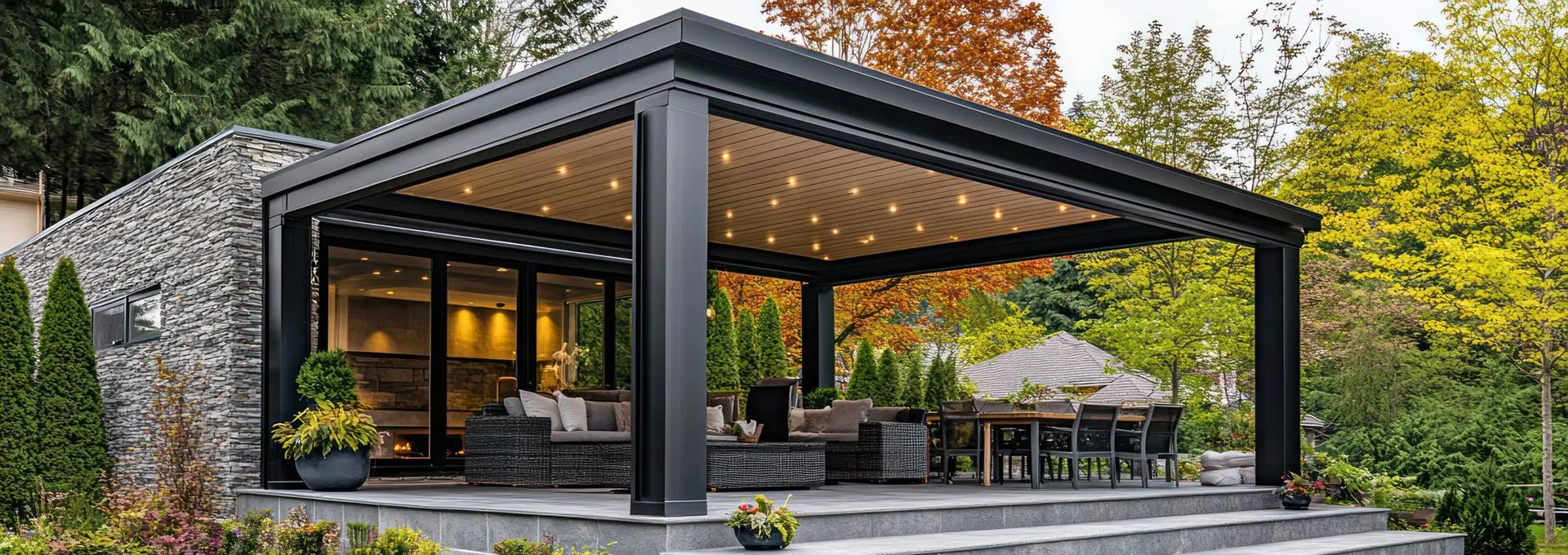
Most outdoor projects stop halfway. The roof gets solved and the sides stay open. A pergola goes up, the tables come out, and the first strong gust or the first slanting rain makes the space unusable again. The problem was never only the sky.
Zip screens exist to close exactly that gap. This article explains how the system works, why the fabric does not flap in the wind, which fabric does which job, and how zip screens really compare with glazed systems. We have also included the sizing and installation details that are most often overlooked.
Contents
- What a zip screen is, and where the name comes from
- How it works: four components
- Wind: this is the real question
- Fabric choice: mesh, soft PVC and clear PVC
- Where it works: five scenarios
- Zip screen or glazing?
- Sizing and installation: four decisions
- Maintenance and service life
What a zip screen is, and where the name comes from
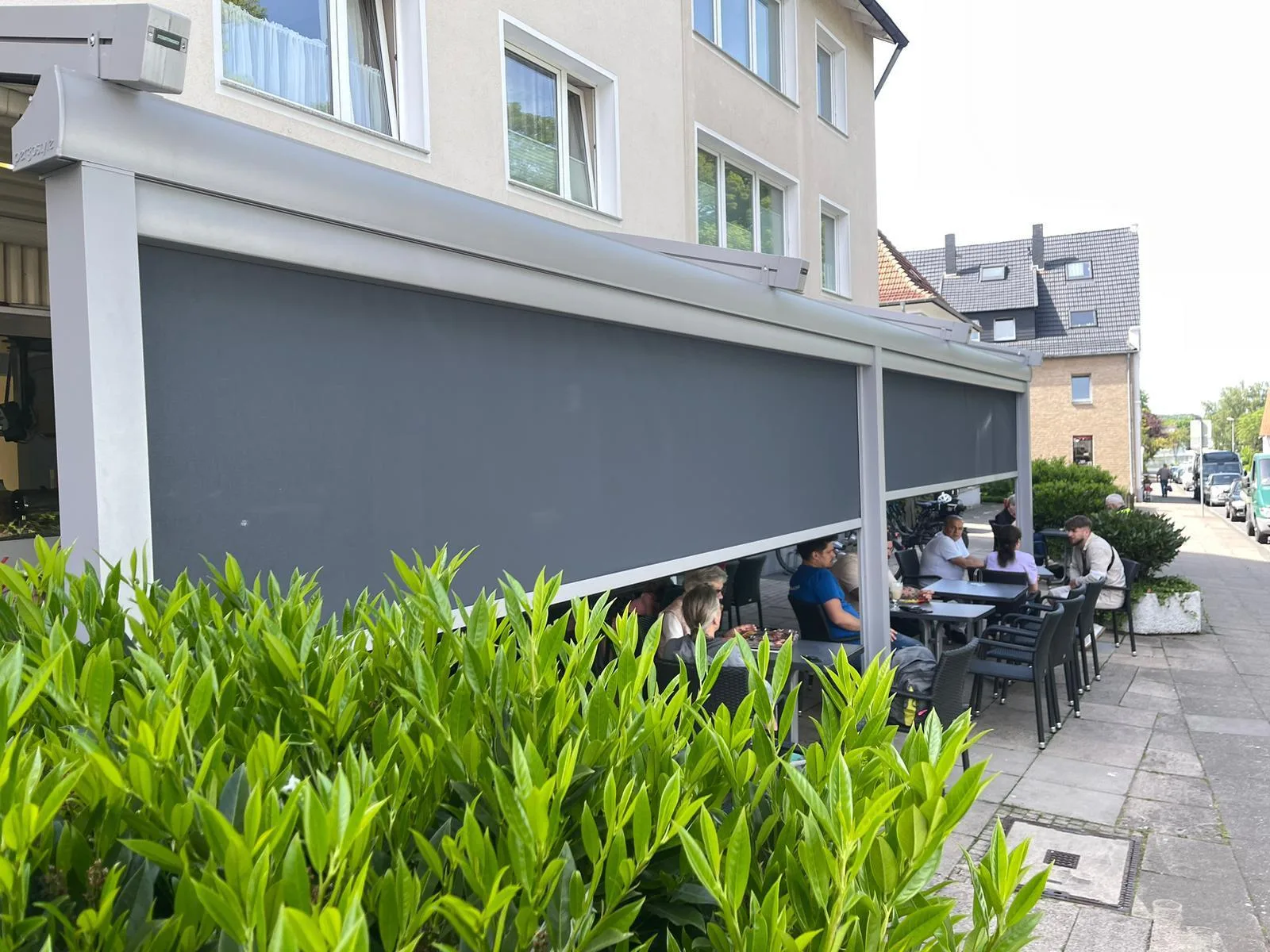
A zip screen is an external blind whose technical fabric carries a zip-like profile stitched along both edges. That profile locks into a channel in the side rails as the fabric travels up and down. The "zip" in the name refers to precisely this.
On a conventional external blind the fabric edge is free. The moment wind gets underneath it, the surface flaps, the fabric leaves its guide, and over time the edge tears. On a zip screen the edge is buried in the rail, so the wind has nothing to grip.
That detail sounds minor, yet it changes the whole system. A zip screen is not a shade — it is an enclosure element. A pergola or awning covers the top; a zip screen closes the side. Used together, an outdoor space finally starts to behave like a room.
How it works: four components
The system looks complicated. It is really four parts:
- Cassette and tube. The fabric rolls onto a tube inside the head cassette. With the cassette closed the fabric is protected from sun and dust — one of the details that extends service life the most.
- Side rails. Aluminium profiles containing the zip channel. The zip profile on the fabric edge runs inside it.
- Bottom bar. A weighted profile that keeps the fabric taut and meets the floor when lowered. A brush or gasket closes the gap at ground level.
- Motor and control. A tubular motor sits inside the tube. It can be operated by remote, wall switch, sun and wind sensor, or a smart-home system.
Manual crank versions are made as well, but beyond about three metres a motorised system lowers more evenly and treats the fabric better: hand winding never applies the same tension twice.
Wind: this is the real question
Wind resistance is what separates a zip screen from an ordinary blind. Manufacturer figures commonly quoted in the sector place closed zip systems in ranges up to around 100 km/h. That number is not a fixed guarantee; it moves with the width of the opening, the profile section and the quality of the fixings.
Three things matter in practice:
- Resistance falls as the opening grows. A 2.5-metre bay and a 5-metre bay do not behave the same way on the same profile. Wide openings want an intermediate post, or splitting the screen into two.
- The fixing matters more than the fabric. A system is only as strong as the surface it is bolted to. A rail screwed into a plasterboard lining will come away in the first gale, however good the fabric is.
- A wind sensor is insurance on the investment. It retracts the screen automatically once a threshold is passed — useful in commercial settings, where someone will eventually forget to close up.
Fabric choice: mesh, soft PVC and clear PVC
Half the decision is the fabric, and quotations usually cover it in a single line. There are three families:
| Fabric | What it does | Where it is right |
|---|---|---|
| Mesh (woven, with an openness factor) | Blocks sun, lets air through. Openness factors typically run between 1% and 10%; the lower the figure, the deeper the shade and the less the view. | Hot climates, daytime use, terraces where the view must not disappear |
| Soft PVC (opaque) | Blocks air and water, closes fully. Noticeably reduces heat loss. | Exposed elevations, winter use, spaces that need privacy |
| Clear PVC (crystal) | Encloses while keeping the view. Thermal performance is weaker than glass. | Hospitality terraces with a view, poolside and seafront settings |
The most common mistake is specifying mesh on looks alone, then discovering the space still gets wet. Mesh is a shade, not an enclosure. If rain has to be stopped, the fabric must be PVC from the outset. Specifying two different fabrics on two different elevations is entirely normal.
Where it works: five scenarios
1. Closing the sides of a pergola
The most common use. The louvres of a bioclimatic pergola solve the roof; zip screens deal with the wind and slanting rain that arrive from the side. When both are planned onto the same structure, the rails disappear into the frame and the result reads as one system.
2. Café and restaurant frontages
They stop tables emptying as the evening cools. With the screens down, the heat the patio heaters produce stays in the space, and the same square metres earn for more hours.
3. Balconies and terraces
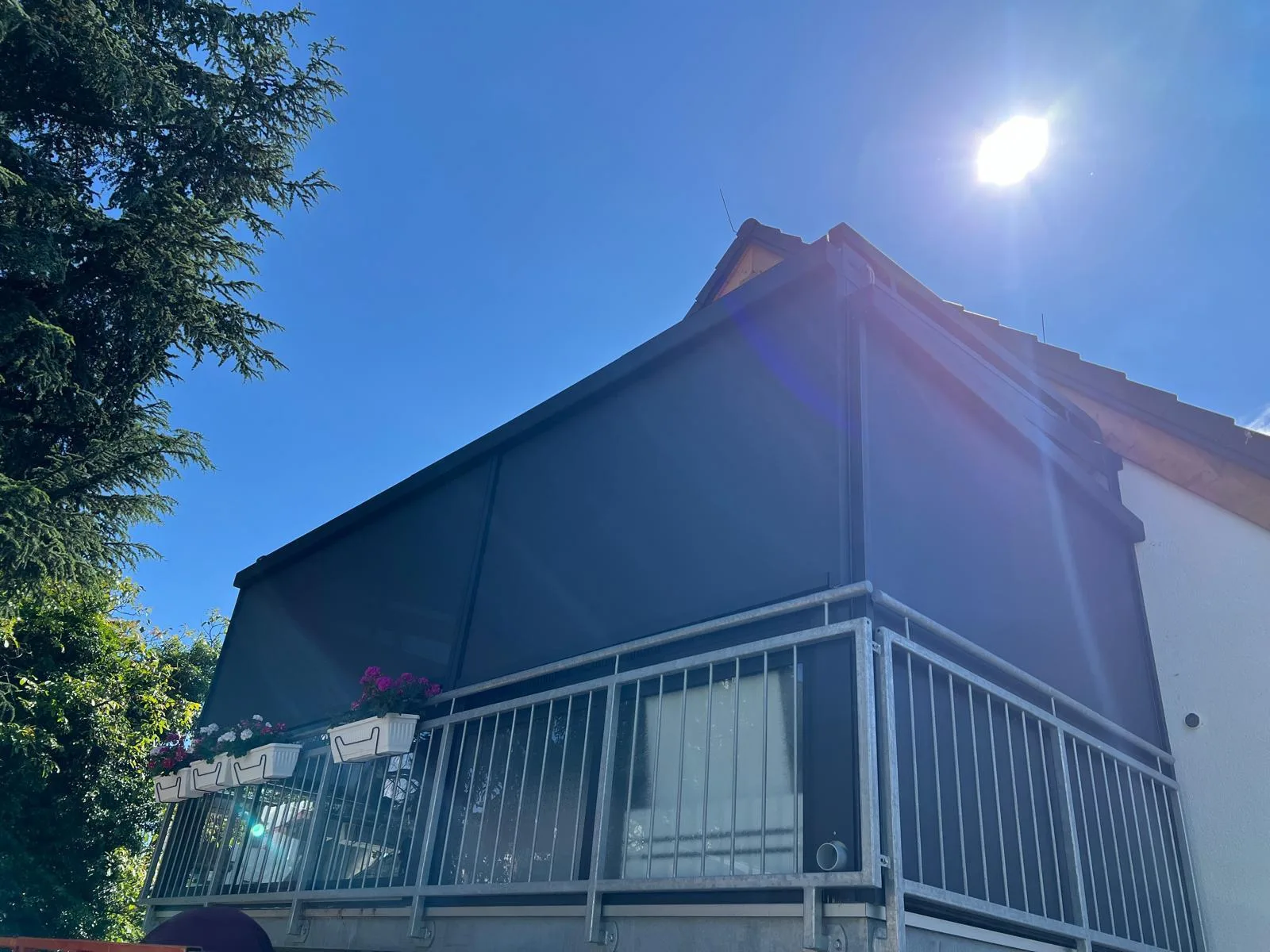
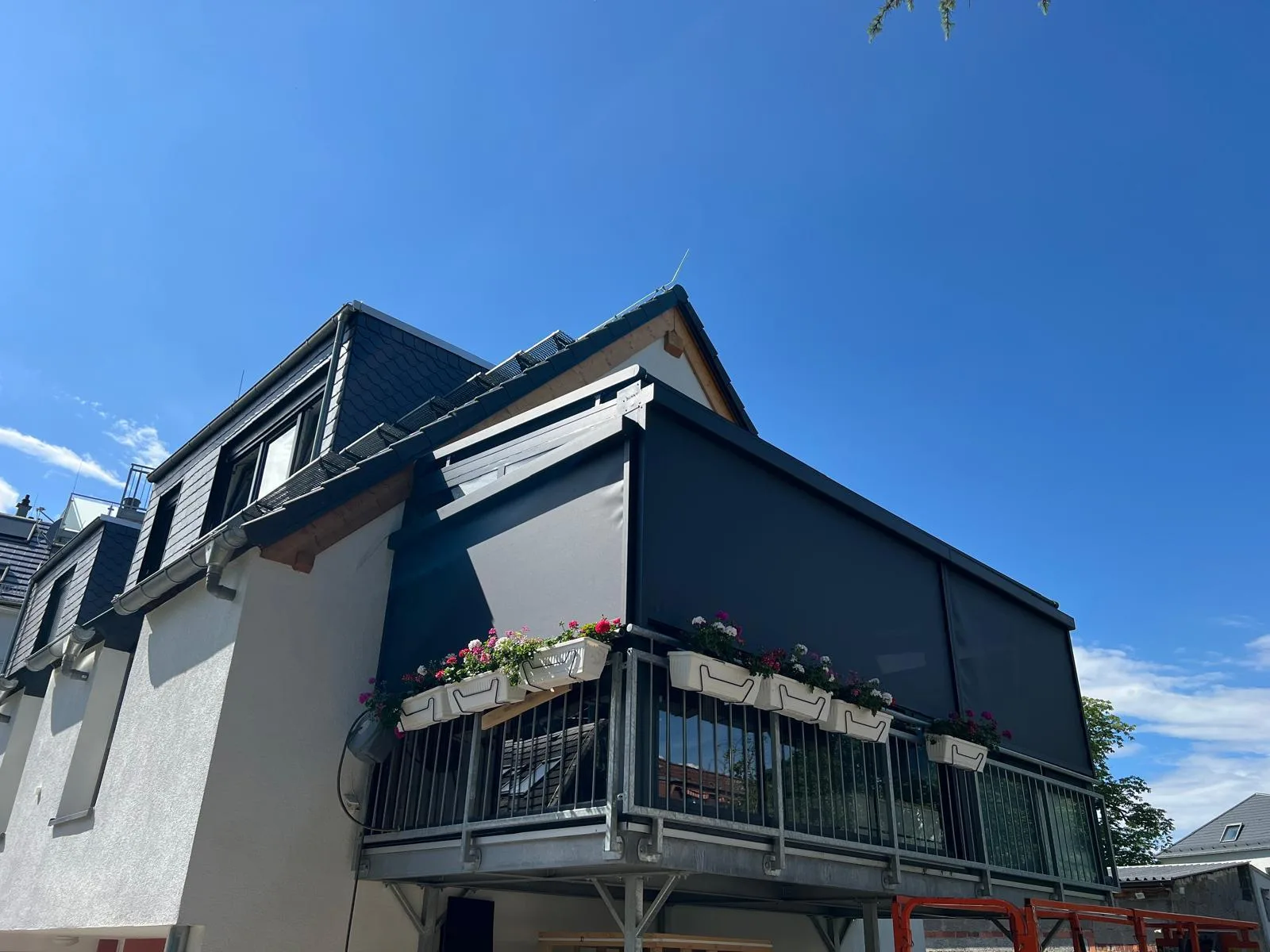
A far lighter intervention than glazing a balcony. Because it does not create an enclosed volume, it also tends to meet less resistance from building management.
4. Pools and garden seating
Cuts the wind and takes the chill off the air moving across the water. A clear fabric keeps the view intact.
5. Shopfronts and entrances
Protects displays from the sun during the day and forms a physical barrier at closing time. This application is often planned together with windbreak systems.
Zip screen or glazing?
This comes up on almost every site visit. The short answer: a zip screen encloses, glass forms a shell.
- If you need thermal performance, choose glass. Fabric will not hold heat you have paid to produce. That calls for guillotine glass or sliding glass systems.
- If flexibility and budget lead, choose zip screens. The cost per square metre is markedly lower, installation is short, and when the screens retract the space is genuinely open again.
- The two combine well. Glass on the exposed elevation and zip screens on the sunny one is a common arrangement. The decision is made elevation by elevation, not building by building.
We have covered which glazing suits which situation in a separate article: comparing guillotine, sliding and folding glass for a winter garden.
Sizing and installation: four decisions
With zip screens, installation causes more trouble than the product. Four points to settle during the site visit:
- Where do the rails go? Inside the reveal or on the face? An inside fixing looks cleaner but takes roughly 8–12 cm off the opening — noticeable on a narrow balcony.
- How does the floor line close? The few centimetres left between the bottom bar and the floor come back in winter as a draught. Brushes, gaskets or a recessed channel should be discussed up front.
- Where does the cassette sit? Cassette heights are typically 12–18 cm. On a low opening that can land over a doorway and drop the headroom.
- Where does the power come from? If the cable route is not planned before installation, it ends up surface-run outside the profile and the result looks improvised.
Maintenance and service life
Maintenance is brief, but the system is unforgiving about neglect. Most faults come not from the mechanism but from dust in the channel.
- Clean the side rails once a season. Dust and leaves in the channel are the number one reason a zip leaves its rail.
- Never roll up wet fabric. Fabric rolled away damp stains and smells inside the cassette. On sensor systems, the "delay after rain" setting exists for this.
- No pressure washers, no solvents. Warm water and a soft brush are enough; chemicals strip the water-repellent finish.
- The fabric is replaceable. When it eventually tires, you renew the fabric rather than the system — the least advertised advantage of a zip screen.
In short
A zip screen is the component that stops an outdoor space being "covered but unusable". Three questions settle the specification: Does it have to stop rain? Will the space be heated in winter? How wide is the opening? Answer yes to the first and mesh is out; yes to the second and glazing belongs on the table; more than five metres on the third and splitting the screen should be discussed.
Elit Pergola manufactures and installs zip screen systems in Adana and the surrounding provinces. Send us the width of the opening, the orientation of the elevation and how you intend to use the space, and after a site visit we will set out which fabric is right and why. See our zip screen systems page for product detail, or get in touch directly.